
 Uncategorized
A Maya city rarely announces itself all at once. In Belize, a stone stairway may appear beyond a curtain of broadleaf forest, followed by plazas, temples, and the traces of a community that thrived centuries ago. This guide to Maya archaeology tours helps you choose an experience that goes beyond a quick photo stop and gives the sites, landscapes, and stories the time they deserve.
Belize is home to remarkable Maya archaeological sites across a relatively small country, from river valleys and jungle reserves to the western hills near Guatemala. That access makes it possible to build a meaningful ruins day around your interests, whether you are traveling as a couple, with family, or with a small private group. The best tour is not automatically the one with the biggest temple or the busiest parking lot. It is the one that matches your pace, comfort level, travel route, and curiosity.
What Makes a Maya Archaeology Tour Worth Taking
Maya sites are not simply old buildings in the forest. They were living centers of government, ceremony, trade, farming, astronomy, and family life. A knowledgeable local guide helps turn stone platforms and carved monuments into a fuller picture: who used the plaza, why a structure faced a certain direction, how people managed water, and what changed when political power shifted.
That interpretation matters because ruins can look deceptively similar without context. A raised mound may have been a residential platform, a temple base, or part of a palace complex. A stela can carry the record of a ruler and a specific historical event. Good guiding gives visitors enough archaeological background to understand what they are seeing without burying the day under a lecture.
The setting is part of the experience, too. Belizean archaeological sites often sit within active natural landscapes. You may hear toucans calling above a plaza, spot leafcutter ants crossing the trail, or notice how the jungle has both protected and reclaimed ancient stone. For travelers who came to Belize for caves, wildlife, and rainforest, a Maya tour creates a strong cultural connection to the same inland environment.
Choose the Right Maya Site for Your Trip
There is no single best Maya ruin for every visitor. Site choice depends on where you are staying, how much driving you want to do, the age and mobility of your group, and whether you prefer major architecture or a quieter, more reflective visit.
For large-scale architecture and a full day
Caracol is Belize’s best-known choice for travelers who want a major ancient city deep in the forest. Its scale is impressive, with broad causeways, extensive plazas, and the towering Caana structure. The trade-off is travel time. A Caracol day is a commitment, particularly from the coast, and it works best when you are comfortable with an early start and a long inland drive.
The reward is the feeling of reaching a true urban center rather than a small roadside stop. A guide can explain Caracol’s regional power, its relationship with rival cities, and the practical realities of building and sustaining a city in the Maya Mountains.
For a balanced, accessible day near western Belize
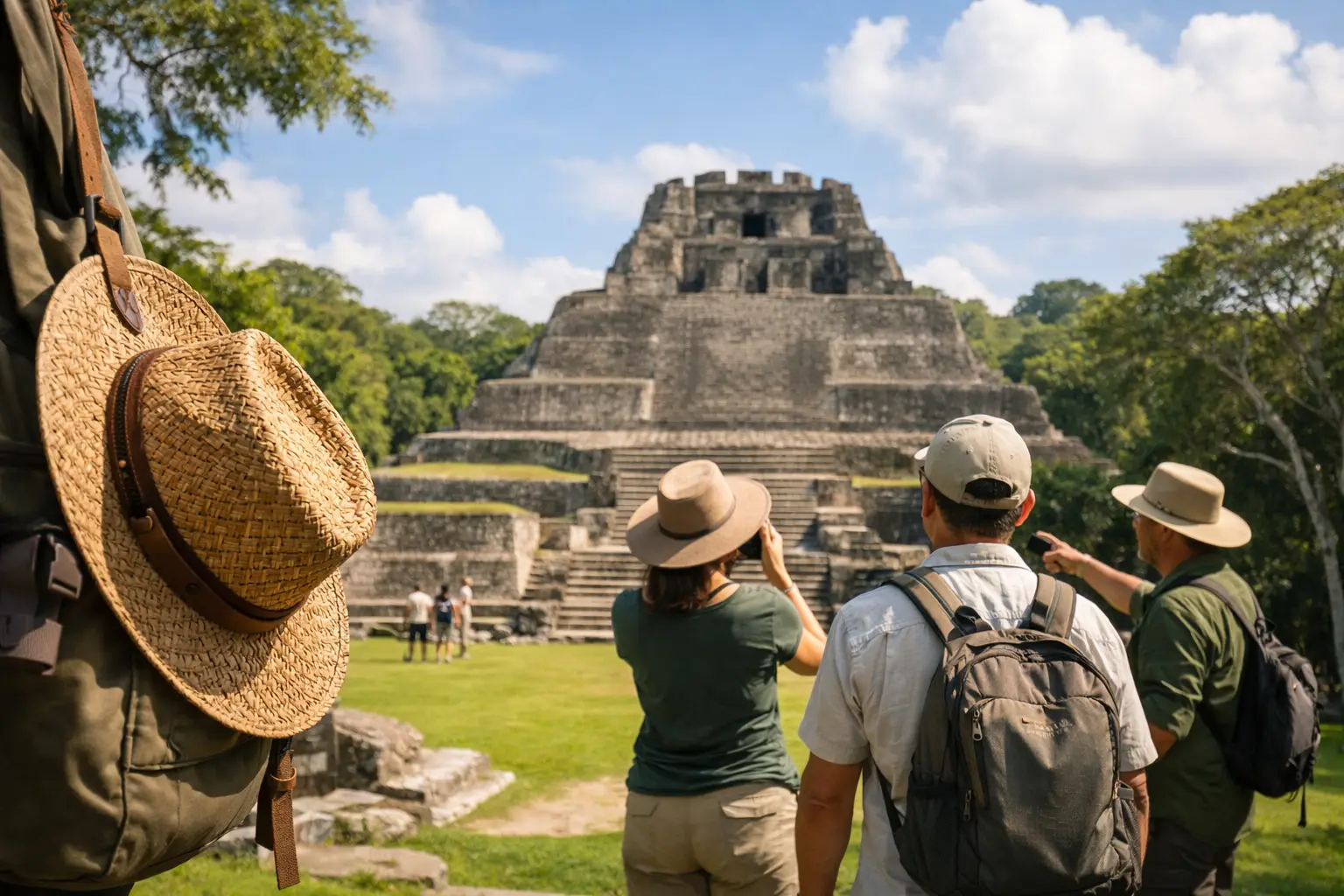
Xunantunich is a strong fit for visitors based near San Ignacio or those traveling through the Cayo District. Reached by a hand-cranked ferry across the Mopan River, it offers an engaging arrival before the archaeological visit even begins. Its central structures are substantial, and the view from El Castillo can reveal the surrounding countryside on a clear day.
Because it is relatively accessible, Xunantunich can be busier at peak times. A private tour with a thoughtful schedule can make a difference. Arriving early, allowing time for interpretation beyond the main temple, and walking the lesser-noticed edges of the site can make the experience feel much more personal.
Cahal Pech, near San Ignacio, is another excellent option for travelers who want a shorter but richly layered visit. Its compact layout of courtyards, rooms, and elevated structures makes it especially useful for understanding how ceremonial and elite spaces related to one another. It can pair well with a cave, jungle, or local food experience without turning the day into a race.
For quiet atmosphere and a deeper sense of place
Some visitors would rather trade headline status for space, forest, and fewer crowds. Sites such as Lamanai offer a different rhythm, with a journey that can include a boat ride through lagoons and waterways before reaching the ruins. The mix of wildlife and archaeology is a major part of its appeal.
Smaller or less-visited sites can also be deeply rewarding when approached with the right expectations. They may not have the tallest pyramids, but they often offer a stronger sense of discovery and more time to ask questions. For families, first-time visitors, or travelers who dislike packed attractions, this can be the better choice.
How to Read a Maya Site With Your Guide
You do not need an archaeology degree to get more from a ruins tour. Come ready to observe, and let the guide connect what you notice to the larger story. Look at how plazas are arranged, where stairways lead, how buildings frame open spaces, and how far the site extends beyond the most photographed structures.
Ask about the people behind the architecture. How did ordinary families live? What crops supported the population? How were goods moved through the region? Which parts of the site were ceremonial, political, or residential? These questions bring useful balance to a visit that might otherwise focus only on kings and temples.
It is also worth asking what archaeologists know with confidence and what remains open to interpretation. Archaeology is evidence-based, but it is not always final. New excavations, deciphered inscriptions, and improved dating methods can change how specialists understand a building or an entire city. A good guide is comfortable with that nuance.
Plan for Comfort, Safety, and Respect
Belize’s inland heat and humidity can surprise visitors, especially when a site involves exposed plazas, uneven paths, and stairs. Start hydrated, wear footwear with grip, and choose light clothing that protects you from sun and insects. A hat, refillable water bottle, rain layer, and sunscreen belong in the vehicle or day pack.
Pace matters more than many travelers expect. Climbing a temple staircase in midday heat is different from walking through a museum. Families with younger children, guests with knee concerns, and travelers arriving from a red-eye flight may enjoy a shorter site with more shaded breaks. There is no prize for seeing every structure if the experience becomes exhausting.
Respect for the site is equally important. Stay on designated paths, do not climb where access is restricted, and never remove pottery fragments, stones, or any other material. What looks like a small souvenir can be part of a larger archaeological record. The same care applies to wildlife and vegetation around the ruins.
Why a Private Tour Changes the Day
A private archaeology tour gives you room to follow genuine interest. If your group is fascinated by Maya writing, you can spend more time discussing stelae. If the children are asking about bats, monkeys, or jungle plants, the guide can make space for that conversation. If you prefer a slower walk and more photographs, the day can be paced accordingly.
This flexibility is especially valuable when combining ruins with another inland experience. A morning at an archaeological site can complement cave tubing, cave kayaking, bird watching, or a jungle walk, but the combination should be realistic. Two demanding activities may sound exciting on paper and feel rushed in the heat. Often, one major site and one well-chosen nature activity make for a better day.
At Belize Inland Tours, private excursions are shaped around this kind of personal pace, with local guiding that connects archaeological heritage to the forest, caves, and communities around it. The goal is not to move a group through a checklist. It is to make sure the day feels safe, unhurried, and rooted in Belize.
The Best Time to Visit Maya Ruins in Belize
Early morning is usually the most comfortable time to be at a site. Temperatures are lower, light is softer for photographs, and wildlife is often more active. It can also help you experience popular locations before larger groups arrive.
Belize’s dry season generally brings easier travel conditions, while the green season brings lush forest, dramatic skies, and the possibility of rain. Neither is automatically better. During wetter months, trails can be muddy and a rain shower may alter the schedule, but the landscape is especially alive. A prepared guide will watch conditions, adjust timing where needed, and make sure rain does not become a reason to miss the experience.
Give the ancient city enough room in your itinerary. Arrive curious, wear shoes you can trust on stone and soil, and allow your guide to slow the story down. The most memorable Maya archaeology tours are often the ones where you leave with a few vivid details still turning in your mind: a carved face on a monument, the view from a plaza, and the quiet sound of the jungle holding it all.

