
 Uncategorized
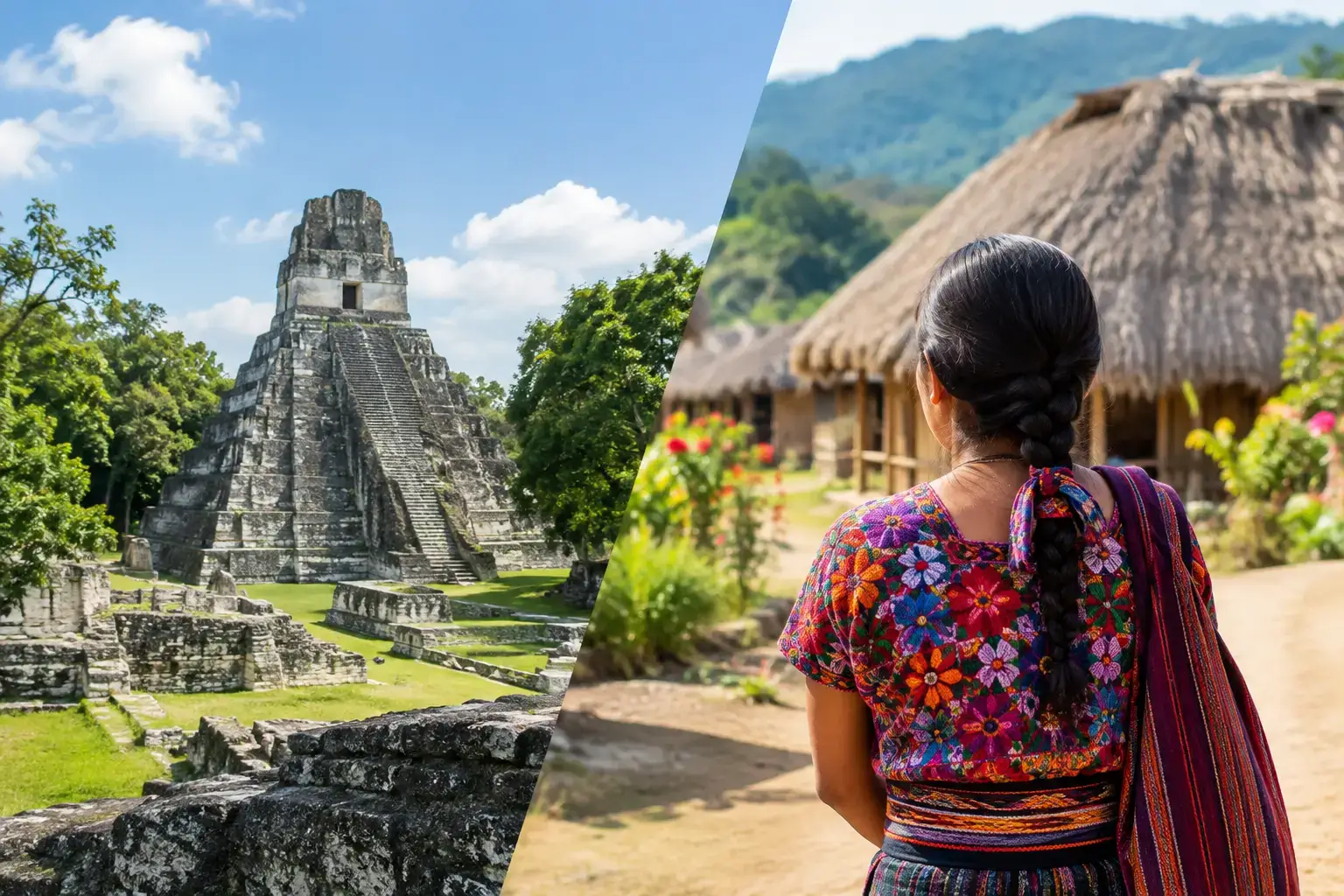
A stone temple rising above the forest and a family preparing a traditional meal can both teach you about Belize. They do not, however, tell the same story. When choosing between Maya archaeology versus cultural villages, the best choice depends on whether you want to stand inside the physical remains of an ancient civilization, spend time with living communities, or build an itinerary that respectfully includes both.
Belize is often introduced through its spectacular Maya sites, and for good reason. Here, jungle trails lead to ceremonial plazas, carved stelae, royal tombs, and temple structures that once anchored powerful city-states. Yet Maya culture is not confined to archaeology. Maya people continue to live, work, raise families, speak their languages, and maintain traditions across Belize today.
For travelers who want more than a photo stop, understanding that distinction creates a far richer inland experience.
What Maya archaeological sites reveal
Maya archaeological sites are places where the landscape still holds the shape of the past. At centers such as Xunantunich, Cahal Pech, Caracol, and Lamanai, visitors can see how communities organized sacred space, trade, agriculture, astronomy, and political power over many centuries.
Walking through a plaza is not simply walking among old buildings. A knowledgeable guide can point out why a temple faces a certain direction, how elevated structures separated ceremonial activity from everyday life, or what a carved monument can reveal about a ruler and a particular date. The best interpretation gives the stones context. Without it, even an impressive site can feel like a collection of steps in the heat.
Archaeology is especially rewarding for travelers drawn to history, architecture, and the scale of the ancient Maya world. It suits families with curious older children, couples who enjoy a meaningful hike with a destination, and anyone who wants to understand Belize beyond the coast.
It also offers something cultural villages cannot: direct contact with the original built environment. You may climb a structure where appropriate, look across a former city center, or follow paths through forest that now covers centuries of history. That physical sense of place can be powerful.
Still, ruins have limits. Archaeological interpretation is built from evidence – structures, ceramics, bones, inscriptions, soil, and ongoing research. It helps us understand the past, but it cannot fully recreate the voices, personal relationships, or everyday choices of every person who lived there. A site is not a complete picture of Maya life, and it should never be presented as if Maya people disappeared when the great cities changed.
Maya archaeology versus cultural villages: the key difference
The simplest difference is this: archaeology interprets material evidence from the past, while a cultural village experience introduces visitors to people and practices in the present.
A thoughtfully run cultural visit may include local food, farming knowledge, cacao preparation, craftwork, music, language, storytelling, or a walk through the landscape with someone who knows it as home. In Belize, Maya communities include Q’eqchi’, Mopan, and Yucatec Maya people, each with distinct histories and traditions. No single village can represent every Maya experience.
That matters because a cultural village should not be treated as a living exhibit. The most worthwhile visits are community-led, welcoming by choice, and clear about who benefits from your visit. You are a guest, not an observer peering into a frozen version of the past.
Cultural experiences can be deeply personal. A conversation about cassava, corn, medicinal plants, or family recipes may connect Belize’s history to daily life in a way a temple complex cannot. At the same time, they are often more structured than travelers expect. Demonstrations may be planned around visitor schedules, and some activities are designed specifically to share cultural knowledge with guests. That does not make them less meaningful. It simply means authenticity is not the same as spontaneity.
The right question is not, “Which option is more real?” Both can be real, valuable, and respectfully operated. Ask instead what kind of connection you are looking for and whether the experience gives proper context, consent, and benefit to the people involved.
When an archaeological tour is the better fit
Choose a Maya ruin tour when you want your day centered on the ancient landscape itself. It is an excellent fit if your group enjoys walking, climbing uneven steps, hearing historical interpretation, and taking time to absorb a place rather than rushing through it.
Private guiding makes a noticeable difference here. You can move at your own pace, ask questions without competing with a large group, pause for photographs, and adjust the day around your comfort level. Belize’s inland heat, humidity, and rugged ground are part of the experience, so a good guide also helps you manage the practical side: water, shade, pacing, safe footing, and realistic timing.
A ruins visit works particularly well when paired with the jungle. A morning at a site followed by cave kayaking, a swim, bird watching, or a quieter forest trail gives the day a natural rhythm. The archaeology explains how people once shaped this land; the forest reminds you that Belize’s inland environment is still alive and changing around it.
When a cultural village visit adds more
Choose a cultural village experience when you are most interested in living heritage and human connection. It can be a strong choice for travelers who enjoy food, conversation, hands-on activities, and learning from local hosts rather than primarily studying architecture.
This option often appeals to families because it gives children tangible points of entry. Grinding cacao, seeing traditional ingredients, or hearing how crops are grown can make culture feel immediate. Adults often find the same experiences memorable for a different reason: they reveal how identity, land, language, and knowledge are carried forward over generations.
Respectful participation is essential. Follow your host’s guidance about photography, clothing, sacred spaces, and what is appropriate to touch or take home. Buy directly from artisans when that opportunity is offered, but do not pressure anyone for a performance or personal story. Small courtesies help keep cultural exchange on the right footing.
A cultural visit can also balance a more active itinerary. After a day of hiking, tubing, or exploring caves, a slower experience built around food and conversation may be exactly what your group needs.
Why combining both creates better context
For many visitors, the strongest answer is not archaeology or a cultural village. It is a carefully paced combination.
Begin with a Maya site and the broad historical picture becomes clear: the sophistication of city planning, the importance of ceremony, the reach of trade routes, and the deep relationship between people and the land. Follow that understanding with a community-led cultural experience, and the story becomes more complete. You are less likely to think of the Maya only in the past tense.
The order can matter. Visiting ruins first can give useful historical grounding, while visiting a community first can help travelers recognize that living Maya identity is not an extension of a museum display. There is no universal rule. The best arrangement depends on your interests, travel time, and the specific hosts and sites available.
Do not try to pack both into one rushed afternoon simply to check two boxes. Belize rewards slower travel. Leave room for the drive through the countryside, a stop for wildlife, questions with your guide, and the unplanned moments that make a private inland day feel personal rather than scheduled.
How to choose an experience with care
Before booking, ask who leads the tour, how the history is interpreted, and whether local communities have a direct role in cultural activities. Look for guides who can explain the difference between ancient Maya civilization and present-day Maya communities without reducing either to a slogan.
Also consider your group’s energy and interests. Archaeological sites can involve sun exposure, stairs, and uneven trails. Cultural visits may be quieter and more conversational, but they ask for openness, attention, and respectful behavior. Neither is automatically better for every traveler.
At Belize Inland Tours, private inland travel is built around that kind of thoughtful pacing. A guide should help you experience the jungle, caves, and Maya heritage with confidence, while leaving space to notice what makes each place distinct.
Belize’s Maya story is written in carved stone, forest paths, family kitchens, and living communities. Give yourself enough time to listen to more than one part of it.
