
 Uncategorized
A jungle trail in Belize can look straightforward at the trailhead: green canopy, damp earth, birds calling somewhere above. An hour later, a missed turn, a rising creek, or a patch of slick limestone can change the feel of the day. That is why the choice between guided hiking vs self guided is less about being an experienced traveler and more about what kind of Belize experience you want.
For some visitors, self-guided hiking offers welcome freedom. For others, a private local guide turns a walk through the forest into a safer, richer encounter with wildlife, caves, stories, and places they would otherwise pass without noticing. Both approaches have a place. The right one depends on your route, your group, the season, and how far beyond the usual viewpoint you hope to go.
Guided Hiking vs Self Guided in Belize
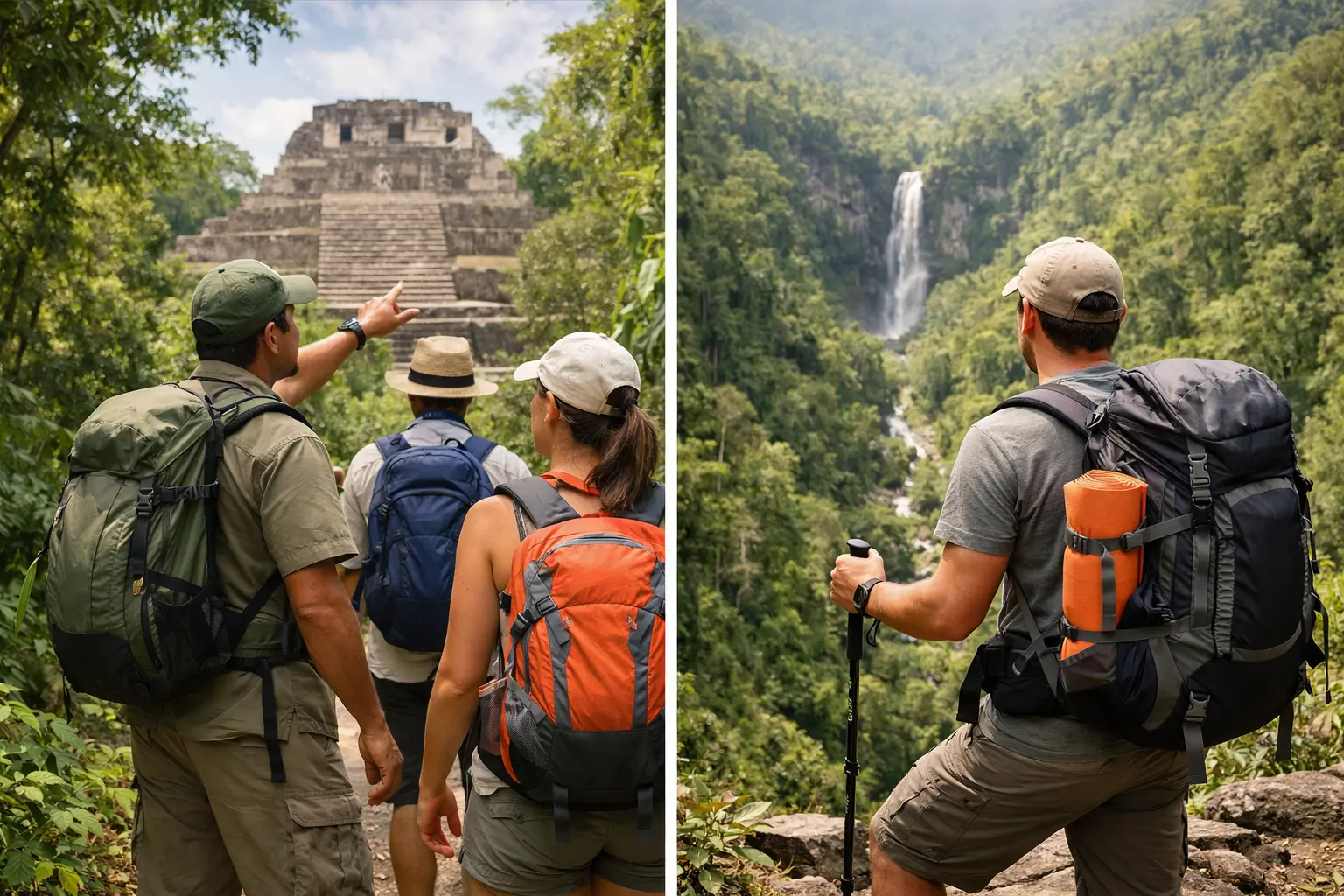
The practical difference is simple. On a self-guided hike, you choose the trail, set the pace, carry your own essentials, navigate, and make decisions as conditions change. On a guided hike, a trained local guide handles route awareness and risk management while adding interpretation that gives the landscape context.
In Belize, that distinction matters more than it may in a heavily marked urban park. Inland terrain can include uneven roots, muddy slopes, stream crossings, limestone, dense vegetation, sudden rain, and trails where signs are limited or conditions have changed since the previous week. A map can show a route. It cannot always tell you whether a section is slippery after a storm, which turn leads toward a cave system, or when it is best to slow down and listen for a troop of howler monkeys.
A guide also changes the rhythm of the hike. Instead of concentrating on whether you are still on the correct path, you can look up. You may notice a leafcutter ant trail, a flash of a bird in the canopy, medicinal plants along the trail, or the evidence of Maya use in the surrounding landscape. For travelers who came to Belize for nature and culture, not simply a step count, that depth is often the real value.
When Self-Guided Hiking Makes Sense
Self-guided hiking can be a good fit for confident, prepared travelers on short, established routes. It works especially well when the trail is clearly marked, your group is comfortable walking independently in heat and humidity, and you have enough daylight to avoid rushing.
It also suits visitors who enjoy moving at their own pace. You can linger at a viewpoint, turn back early, take a longer break, or adjust the day around the rest of your plans. A couple staying nearby may prefer an easy morning walk followed by a relaxed lunch rather than a scheduled excursion.
That freedom comes with responsibility. Before heading out, confirm current access rules and trail conditions, tell someone where you are going, bring more water than you think you need, and protect your phone from rain. Wear shoes with reliable grip rather than sandals, even on a trail that sounds easy. Belize’s humidity can make a modest route feel more demanding than the distance suggests.
Self-guided hiking is best viewed as a simple, contained adventure. Choose it for well-known trails where navigation is clear and the goal is fresh air, exercise, and a quiet hour or two in nature. Do not choose it just because a route looks short online. Distance is only one part of the decision.
What a Local Guide Adds Beyond Directions
A good guide does more than lead from the front. They read the conditions, adapt the route to the group, and make sure every traveler feels included. For families, that may mean choosing a manageable pace and pointing out the small discoveries that keep children engaged. For active couples, it may mean taking a quieter trail or extending the day with a cave, swimming stop, or wildlife-focused section.
Local knowledge is particularly valuable around Belize’s caves and jungle environments. Cave systems deserve respect: footing can be uneven, entrances can be darker and cooler than expected, and water levels or weather can affect access. A guide knows when an area is appropriate for the group and when another route is the smarter call.
There is a cultural dimension, too. Belize’s inland landscapes are not empty scenery. Forests, rivers, caves, and archaeological areas carry ecological and Maya heritage that are easy to miss without someone who knows the place. A guide can explain why a particular tree matters, how cave environments were used in the past, or what makes a bird call worth stopping for. Those details make the experience feel rooted in Belize rather than interchangeable with a hike anywhere else.
For travelers seeking a more personal day, private guiding has another advantage: flexibility without isolation. You can ask questions, take photos, rest when needed, and shape the outing around your interests, while someone experienced remains attentive to the route and conditions.
Safety Is Not About Fear
Choosing a guided hike does not mean you are unprepared or less adventurous. It means you understand that adventure is better when the risks are managed well. The goal is not to remove every challenge from the day. It is to make thoughtful choices about the challenges worth taking.
Weather is one of the biggest variables. A brief tropical shower can turn dry-looking ground slick, fill low spots, and change a creek crossing. Heat can also catch travelers off guard, particularly those arriving from cooler climates or spending their first days in Belize. Experienced guides watch the sky, carry appropriate equipment, and recognize when the group needs water, shade, or a change of plan.
Wildlife is another reason to stay observant, not anxious. Belize’s jungle is alive with insects, reptiles, birds, and mammals, most of which would rather avoid people. A knowledgeable guide helps you move respectfully through habitat, identify what you are seeing, and respond calmly if the trail presents an unexpected encounter.
If anyone in your group has mobility concerns, a fear of tight spaces, very young children, or limited hiking experience, guided travel is usually the more comfortable choice. The right outing can be selected before the day begins rather than discovered through trial and error on the trail.
Think About the Experience You Want to Bring Home
The guided or self-guided question is also a question of memory. A self-guided walk may give you peaceful time together and the satisfaction of finding your own way. A guided hike may give you the story behind the forest, a hidden swimming spot, a safer route through changing terrain, and a better chance of noticing wildlife before it disappears into the leaves.
Neither option is automatically superior. If your goal is a short walk on a clear route, independent hiking can be exactly right. If you want to explore caves, travel deeper into the jungle, understand the land, or avoid spending the day making navigation decisions, a local guide is likely the better investment.
At Belize Inland Tours, private hiking experiences are designed for travelers who want that second kind of day: fewer crowds, a pace shaped around their group, and time with a guide who knows the inland landscape firsthand. The point is not to rush through a checklist. It is to be present enough to hear the forest change around you.
A Simple Way to Decide Before You Go
Ask yourself three honest questions. Is this trail clear and manageable for everyone in my group? Am I comfortable being responsible for navigation, weather decisions, and turnaround timing? And do I want to understand what I am seeing, or am I mainly looking for independent time outdoors?
If you answer yes to the first two and want a relaxed, established route, self-guided hiking can be rewarding. If you hesitate on any of them, or if the hike involves caves, remote terrain, wildlife interest, or a meaningful cultural setting, go with a guide.
Belize rewards travelers who slow down. Whether you set out independently or follow a local guide beneath the canopy, leave room in the day for the unexpected: the sound of water below the trail, a bright wing moving through the trees, or a story that makes the jungle feel less like a backdrop and more like a living place.

