

 Uncategorized
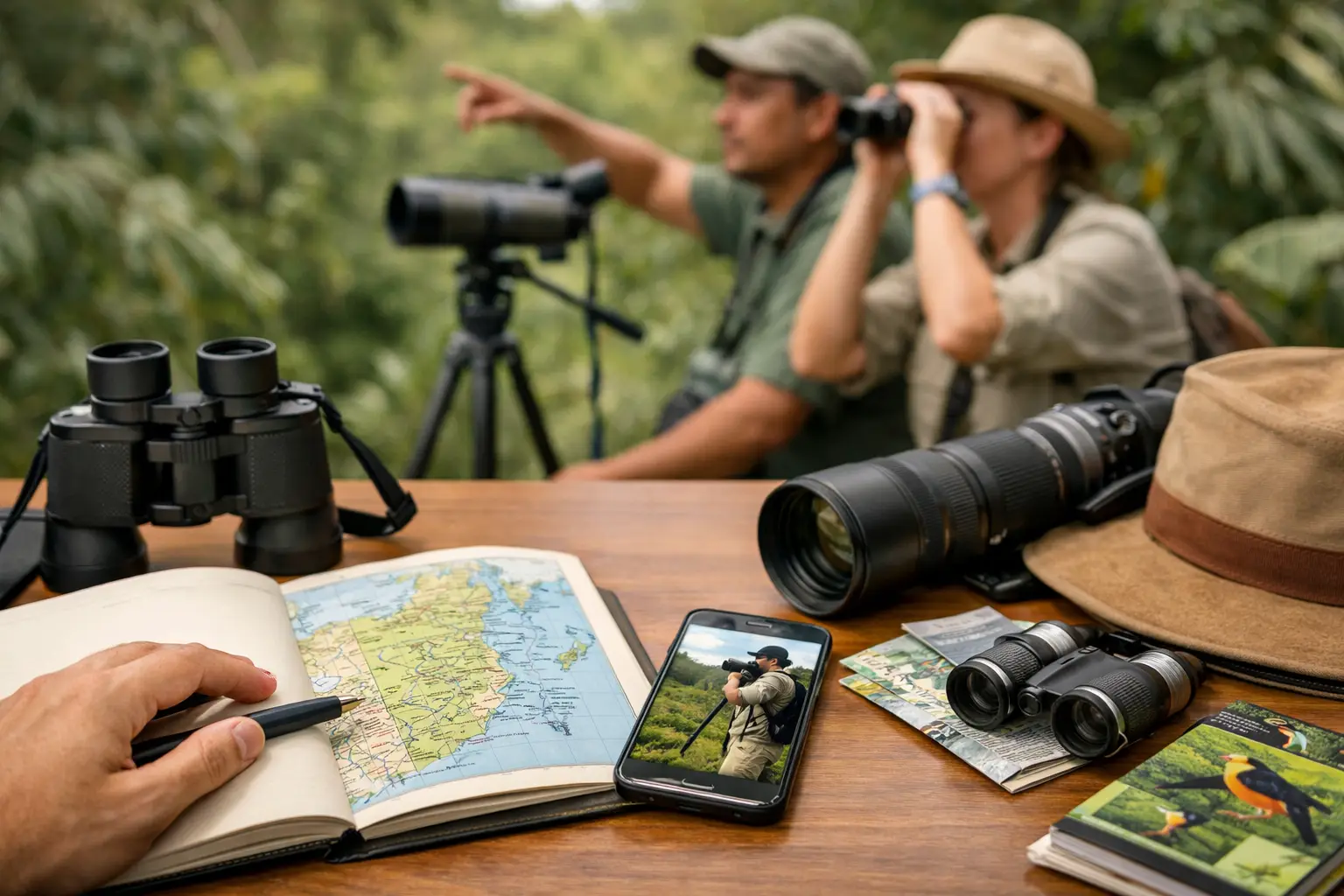
Belize mornings begin with sound: the rising call of a Great Curassow, the quick chatter of parrots overhead, and, if you are lucky, the deep wingbeats of a Keel-billed Toucan moving through the canopy. Knowing how to book birding guides can be the difference between simply walking through a beautiful forest and understanding what is alive around you.
A good local guide does more than point out birds. They recognize calls before the bird is visible, know which fruiting trees are drawing activity, understand how weather changes a morning’s sightings, and help you move quietly through sensitive habitat. For travelers who want a personal, low-crowd experience in Belize, booking the right guide starts well before the first pair of binoculars comes out.
How to Book Birding Guides Who Know the Area
Start by looking for a guide or tour operator with real, on-the-ground knowledge of the area you plan to visit. Belize has several distinct birding environments in a relatively small country: broadleaf jungle, pine savanna, rivers, wetlands, limestone foothills, agricultural edges, and coastal habitats. A guide who is excellent around mangroves may not be the best fit for a full jungle morning near the Cayo District or St. Herman’s Blue Hole National Park.
Ask where the guide spends most of their time birding and what habitats they regularly work in. Specific answers matter. A knowledgeable local guide should be able to explain what may be seen in the season, where certain birds are most likely to occur, and how the day’s route may change after rain or during a hot afternoon.
It is also worth asking whether birding is a central part of the experience or an added stop on a larger sightseeing tour. There is nothing wrong with a general nature excursion, especially for families or first-time visitors. But serious birders, photographers, and travelers with a target species in mind will usually benefit from a guide who can devote time to listening, scanning, and following activity rather than rushing to the next attraction.
Match the Guide to Your Birding Style
Not every birding day needs to begin before sunrise with a species checklist in hand. The best guide for your trip depends on what you want from the experience.
If you are new to birding, look for someone patient and conversational who can help you learn the common birds first. Seeing a Montezuma Oropendola colony, a bright Lesson’s Motmot, or a trogon is more meaningful when your guide can explain its behavior, habitat, and place in the forest. A relaxed private outing leaves room for questions and lets you enjoy the jungle as a whole, not just the next sighting.
Experienced birders may prefer a guide who understands target species, calls, and field identification. Share your wish list in advance, but keep it realistic. Birds are wild, and ethical guides should never promise a particular sighting. What they can promise is a well-timed effort in suitable habitat, with careful attention to the conditions that give you the best chance.
Photographers have another set of needs. Ask about light, walking pace, forest density, and whether the route allows time to wait quietly at productive locations. A fast-moving birding group can be frustrating when you are trying to photograph a wary woodpecker in filtered jungle light. Private guiding is often the better choice because the pace can follow your interests.
Families and mixed-interest groups should be honest about energy levels and comfort. A guide can build a rewarding morning around easier trails, short walks, wildlife interpretation, and bird-rich clearings. You do not need to be an expert or hike for hours to have a memorable Belize birding experience.
Ask About Timing, Weather, and Season
The early morning is usually the most active and comfortable time for birding in Belize. Many forest birds call more frequently after first light, temperatures are lower, and wildlife is less disturbed. If birding is a priority, avoid booking a late start simply because it is more convenient. An early departure often pays off.
Season affects what you may see, too. Belize offers rewarding birding year-round, but migration adds another layer from roughly late fall through spring. During these months, resident tropical species may share the forest with wintering warblers, vireos, flycatchers, and other visitors from North America. Migration periods can make a familiar trail feel especially active.
Rain should not automatically cancel your plans. A brief shower can cool the forest and bring movement afterward, while heavy rain may make trails slippery and bird activity harder to follow. Ask your guide how they handle changing conditions. A thoughtful operator will have a practical plan, whether that means adjusting the route, changing the start time, or selecting more sheltered habitat.
Confirm Group Size and the Day’s Pace
Birding works best when the group is small. Large groups create more noise, block views on narrow trails, and make it harder for everyone to hear a distant call. If you value a quiet, unhurried experience, ask whether the outing is private and how many guests will be with you.
Private birding also gives your guide room to adapt. You might spend twenty minutes watching a mixed flock pass through the canopy, pause for a calling owl, or take a slower route because the forest is alive with movement. On a fixed, high-volume itinerary, those moments are often lost to the schedule.
Before you book, discuss the length and physical level of the outing. Ask about terrain, trail conditions, heat, insects, restroom access, and transportation. Belize’s inland landscapes can be wonderfully wild, but comfort and preparation still matter. A professional guide should explain what to bring and what to expect without making the experience feel intimidating.
For most jungle outings, lightweight neutral clothing, closed-toe shoes, water, insect repellent, rain protection, binoculars, and a small notebook are useful. If you do not own binoculars, ask whether they are available. Good guides often carry a spotting scope or spare optics, but it is best to confirm rather than assume.
Look for Ethical, Safety-Minded Guiding
The most memorable sightings happen when birds are treated with respect. Ask how the guide approaches playback, nesting birds, and close encounters. Used sparingly and responsibly, audio can sometimes help locate a bird, but repeated or aggressive playback can cause stress. A guide should never pressure wildlife for a photo or lead guests off trail in a way that damages habitat.
Safety is equally practical. Jungle birding may involve uneven ground, changing weather, river crossings, or isolated trails. Choose a licensed local operator that knows the route, carries appropriate safety equipment, and communicates clearly about conditions. Local knowledge is not only about finding birds. It is about knowing how to move comfortably and responsibly through the landscape where they live.
Belize Inland Tours, for example, pairs private inland experiences with experienced local guiding and direct access to quieter natural areas near St. Herman’s Blue Hole National Park. That type of local connection can make a birding outing feel less like a checklist and more like time spent in a living forest.
Share Your Priorities Before You Confirm
The easiest way to improve a guided birding day is to communicate early. Tell your guide whether you are a beginner, a lister, a photographer, or traveling with people who are interested in nature but not focused on birds. Mention any mobility concerns, preferred start times, target species, and whether you would like to combine birding with a cave, Maya site, or jungle hike.
It helps to send a short list of priorities rather than an overwhelming list of every bird found in Belize. For example, you might say that you would love forest species, toucans, motmots, raptors, and chances to photograph colorful birds. Your guide can then recommend the habitat and timing that fit your goals instead of trying to cover too much ground.
Also ask what is included in the price. Transportation, park fees, meals, water, loaner binoculars, and gratuity policies vary. Clear details prevent surprises and let you compare options fairly. The cheapest tour is not always the best value if it places you in a crowded group, shortens your time in the field, or provides little birding expertise.
A good birding guide will help you notice more than names on a list. They will show you how a forest wakes up, why a flock is moving through one ridge instead of another, and when it is worth standing still. Book with that kind of curiosity, leave room for the unexpected, and Belize’s inland birdlife will do the rest.

