

 Uncategorized
Some travelers come to Belize for the reef and only later realize the country’s inland caves can be the most memorable part of the trip. A good guide to Belize cave systems starts with that shift in perspective – these are not just dark spaces in the jungle. They are rivers, chambers, Maya ceremonial sites, wildlife habitat, and living landscapes that feel very different depending on how you enter them.
That difference matters. One cave may be ideal for a relaxed tubing day with a family, while another is better for guests who want to paddle, scramble, swim, or spend more time learning the cultural story behind the stone. If you choose well, cave time in Belize does not feel like a box checked on an itinerary. It feels like stepping into a side of the country that is quieter, older, and far more personal than the usual tourist route.
Why Belize cave systems stand out
Belize has the right mix of geology, jungle, and water to create cave experiences with real variety. Limestone terrain has formed extensive underground passages over time, and many of those passages carry streams or open into dramatic chambers. What makes the experience even richer is the Maya connection. In many cave systems, these spaces were once used ceremonially, which means a cave visit is often part adventure and part cultural interpretation.
For travelers, that creates a rare combination. You are not choosing between scenery and history. You are often getting both at once, with the sounds of water, filtered jungle light at the entrance, and a guide explaining how the cave fits into Belize’s larger natural and cultural landscape.
Another reason these caves stand out is access. Some are reachable in a way that works well for first-time adventurers. Others ask more of you physically and reward that effort with a stronger sense of remoteness. The best choice depends less on what looks dramatic in a photo and more on how you want to experience the day.
A guide to Belize cave systems by experience type
The easiest way to understand Belize caves is by how people move through them. That tells you more than a simple list of cave names.
Cave tubing
Cave tubing is often the best fit for travelers who want a softer adventure. You hike in, enter the river system, and float through sections of cave with a guide leading the pace and sharing context along the way. The current is usually gentle, and the physical demand is moderate rather than intense.
This style works especially well for couples, families with older children, and guests who want scenery without a technical outing. The trade-off is that tubing is not the most active format. If you want to feel more engaged with the route itself, kayaking or exploratory caving may be a better fit.
Cave kayaking
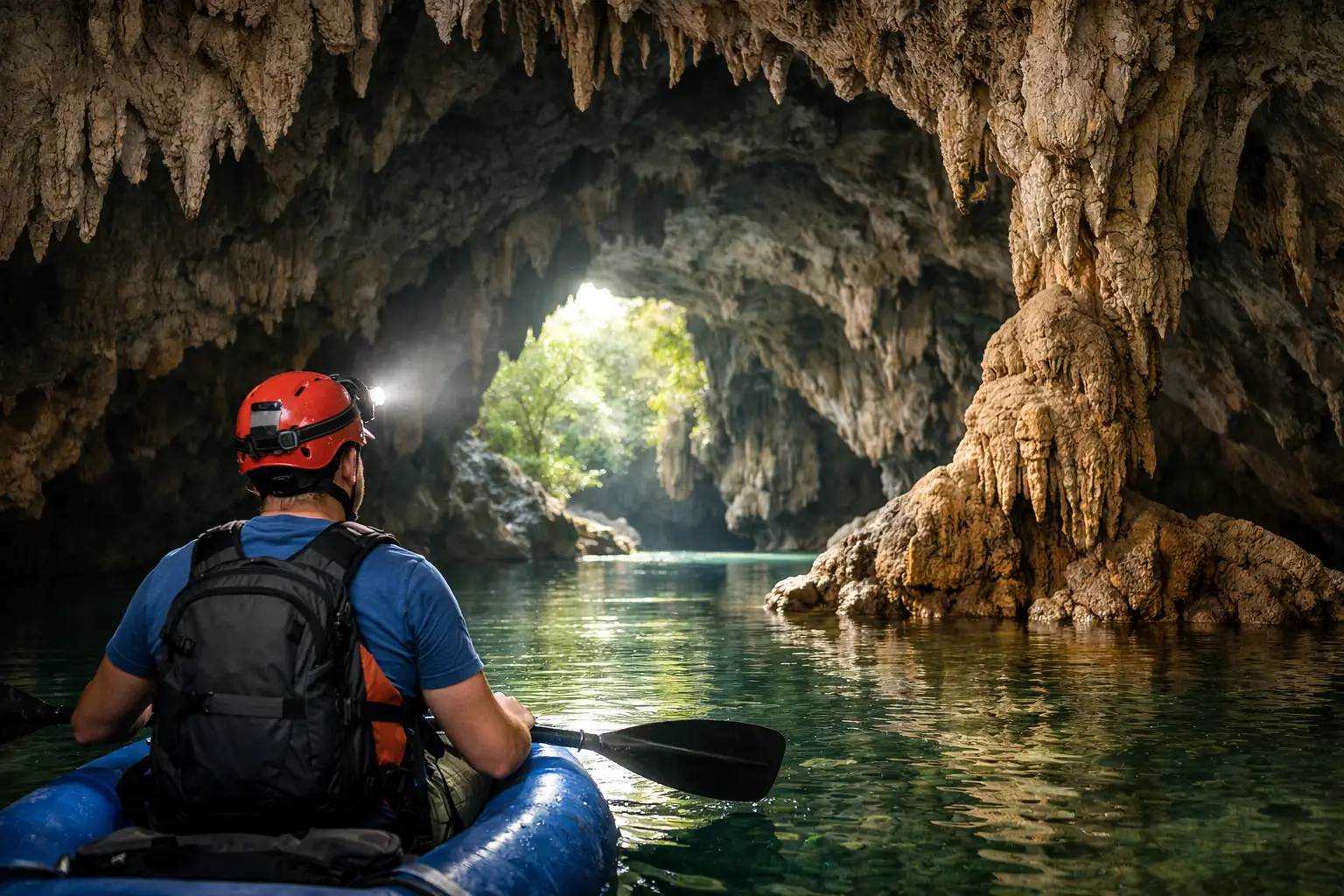
Kayaking changes the rhythm completely. Instead of floating with the current, you paddle and control your movement through calm cave waters and open sections nearby. That gives you a closer sense of the cave’s shape and scale, and many travelers enjoy the extra involvement.
For some guests, this is the sweet spot between comfort and adventure. It is still accessible for many active travelers, but it feels more immersive than tubing. The main consideration is confidence on the water. You do not need to be an expert paddler, but you should be comfortable following instructions and moving independently in a kayak.
Swimming, hiking, and more rugged cave exploration
Some Belize cave experiences involve a mix of hiking, wading, scrambling over rock, and swimming through sections of the system. These are usually more demanding and better suited to travelers who want a stronger adventure component.
The payoff is depth. You may reach areas that feel more secluded, spend more time on the cave’s formation and history, and come away feeling like you truly traveled through the landscape rather than passed through it. The trade-off is simple: more effort, more exposure to uneven terrain, and a greater need for proper guidance.
What to expect inside Belize caves
Even first-time cave visitors are often surprised by how much the environment changes within a short distance. At the entrance, there is usually humidity, birdsong, and green jungle all around. A few minutes later, the temperature may feel cooler, the light drops away, and your attention shifts to rock formations, sound, and water movement.
Some caves are wide and calm, with enough space to feel open rather than enclosed. Others narrow down or create a stronger sense of being underground. If you are even mildly claustrophobic, that is worth mentioning when you book. A good operator can steer you toward a system that feels comfortable instead of intense.
You should also expect conditions to vary with the season and weather. Water levels, clarity, and flow can change. That does not automatically make a trip better or worse, but it does shape the experience. During wetter periods, routes may feel more powerful and dramatic. In drier conditions, visibility and ease of movement may improve in some systems.
Safety and guidance matter more than most people think
A proper guide to Belize cave systems has to be honest about this point. Caves are not dangerous by default, but they are environments where local knowledge matters. Water conditions, footing, route choice, weather, and group pace all influence how the day goes.
That is one reason many travelers prefer a licensed local operator rather than a high-volume outing with a rushed schedule. In a cave setting, personal attention makes a real difference. Smaller groups usually move more comfortably, ask more questions, and avoid the stop-and-start feeling that can take away from the experience.
Good guides also add something beyond logistics. They help you understand what you are seeing. A chamber is more meaningful when you know how it formed, how Maya communities related to cave spaces, or why one river passage behaves differently from another. That local interpretation is often what turns a fun outing into a memorable one.
How to choose the right cave experience
The right choice starts with honesty about your travel style. If you want a scenic and low-stress day, tubing often makes sense. If you want more movement and control, kayaking is a strong option. If you are motivated by challenge and don’t mind getting fully wet, a more rugged exploration may be the better fit.
Your group makeup matters too. Families usually do best when the experience matches the least confident member, not the most adventurous one. Couples and private groups often have more flexibility to choose something quieter or more specialized. That is where a personalized inland tour can make a big difference, because the day can be shaped around your pace rather than pushed by a large mixed group.
It also helps to think about what you want most from the day. Some travelers care mainly about the cave itself. Others want a broader inland experience with jungle scenery, wildlife, or nearby cultural stops. Neither approach is wrong, but knowing your priority makes it easier to pick the outing that actually fits.
What to wear and bring
Most cave trips are better when you keep things simple. Wear clothing that can get wet and shoes with secure traction. Water shoes or sturdy sandals are often more useful than anything bulky. Quick-dry clothing is usually the most comfortable choice, especially in Belize’s heat.
Bring a change of clothes for afterward, and do not expect to keep electronics perfectly dry unless they are properly protected. If you wear glasses, think ahead about retention straps. If you burn easily, sun protection matters for the open sections before and after the cave, even if much of the experience is shaded.
More important than packing extra gear is listening to the pre-trip guidance you receive. Different cave systems call for slightly different preparation. A lighter tubing excursion and a more active cave exploration are not the same day, and your gear should reflect that.
When a quieter cave experience is worth seeking out
Not everyone wants the busiest, most advertised cave tour. Many travelers come inland because they want a more grounded Belize experience – less crowd noise, more connection to the setting, and enough time to actually take in the place.
That is often where private guiding stands apart. You notice more when the pace is unhurried. You hear the water, watch the cave ceiling change overhead, and have room to ask questions without feeling like you are being moved along. Belize Inland Tours builds around that kind of experience, which suits guests who want the cave to feel personal rather than packaged.
Belize caves reward curiosity more than speed. If you choose the experience that fits your comfort level, go with a guide who knows the landscape well, and leave room for the unexpected moments, the caves tend to stay with you long after the trip is over.

