
 Uncategorized
A cave can feel completely different when you enter it with only your own group, a local guide, and enough time to notice the details. This private cave trip example shows how a quieter Belize inland adventure can unfold, from the first jungle steps to the moment daylight returns at the cave entrance.
For many travelers, the difference is not simply avoiding a crowd. It is having the freedom to ask questions, move at a comfortable pace, pause for a photograph, and hear the cave rather than a line of people behind you. In Belize, caves are part of the landscape, but they are also part of a much deeper cultural and natural story.
What a Private Cave Trip Example Can Look Like
Imagine a couple, family, or small group staying near Belize City, the coast, or the western interior. Rather than joining a large coach group with a fixed schedule, they arrange a private inland outing built around their interests and comfort level. Their guide meets them for a scenic drive inland, where the flat coastal landscape gives way to limestone hills, broadleaf forest, and the cooler shade of the jungle.
The day begins with a practical conversation, not a rushed handoff of equipment. Your guide reviews the route, water conditions, footwear, and what to expect underground. This is the right time to mention concerns such as swimming confidence, young children, mobility limitations, or a preference for a more active route. A well-planned private trip is not about proving how adventurous you are. It is about choosing an experience that suits the people in your group.
At St. Herman’s Blue Hole National Park, the setting quickly changes the mood of the day. The forest feels close, birds move through the canopy, and the trail leads toward a cave system shaped over thousands of years by water moving through limestone. With direct access to this area, Belize Inland Tours can focus on the experience itself rather than the hurried rhythm often found on high-volume excursions.
The Jungle Approach Sets the Pace
Before reaching the cave, there is time to pay attention to the forest. A guide may point out medicinal plants, leafcutter ants, bird calls, or the way the terrain reveals Belize’s limestone foundation. These details are easy to miss when a group is trying to keep up with a tight timetable.
The walk is also a useful warm-up. It gives everyone time to settle into the environment and allows your guide to assess the group’s pace. Families may take it slower and stop more often. Experienced travelers may prefer a more active approach. Either way, the goal is not to rush toward the cave. The approach is part of the adventure.
Entering the Cave
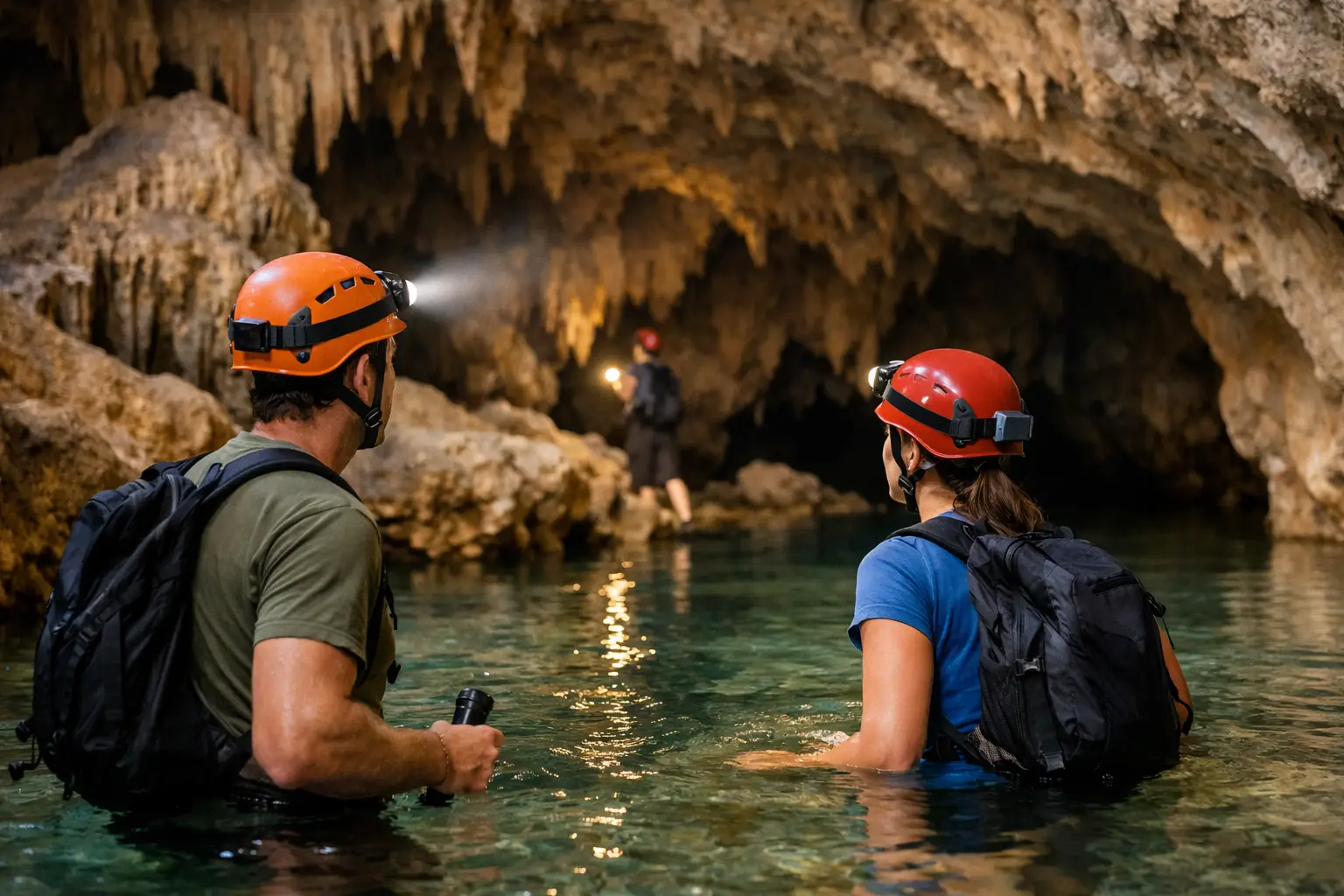
At the entrance, the air often becomes cooler and the sounds of the forest begin to fade. Light reflects from the water, and limestone formations appear in shapes that only make sense after your guide explains how caves form. Depending on the selected activity and conditions, the group may continue through sections of the cave by tube, kayak, or on foot.
This is where a private setting matters most. One group may want to hear about the Maya relationship with caves, which were viewed as powerful places connected to water, ancestors, and the underworld. Another may be more interested in the geology, bats, or the thrill of moving through a dark passage with headlamps. A knowledgeable local guide can shape the interpretation around those interests without holding up a busload of strangers.
There are moments for quiet as well. In a cave, silence is part of what visitors remember. The gentle sound of water, the drop of condensation from the ceiling, and the narrow beam of a light against ancient rock all create a sense of distance from everyday life. That feeling is difficult to find when dozens of people enter at once.
Safety Is Part of the Experience, Not an Afterthought
A memorable cave trip should feel exciting without feeling uncertain. Belize’s caves are natural environments, and conditions can change with rainfall, seasonal water levels, and group ability. A responsible guide makes decisions based on the day, not on a rigid promise made weeks earlier.
Before entering, your guide should explain how to use the provided gear, where to step, when to stay close together, and how to communicate in darker sections. Life jackets, helmets, lights, and appropriate footwear may be part of the plan depending on the activity. The specific equipment matters, but so does the guide’s judgment: knowing when a route is suitable, when to take a slower section, and when weather calls for an adjustment.
Private travel offers a real advantage here. The guide can give individual attention to a first-time cave explorer, help a child feel comfortable in the water, or choose a pace that keeps the group confident. That does not mean every private trip is effortless. Some routes involve uneven ground, cool water, swimming, or low-light conditions. The best experience comes from being honest about what you enjoy and allowing your guide to recommend the right level of adventure.
A Flexible Day Beyond the Cave
A private cave outing does not need to end the moment you step back into daylight. This is one of the strongest reasons to choose a custom inland experience. If the group wants a relaxed day, there may be time to enjoy the forest, cool off near a natural swimming area, or stop for a Belizean lunch before returning.
For travelers who want more activity, the cave can be paired with a jungle hike, wildlife-focused walk, or a Maya site visit. The right combination depends on your travel schedule and energy level. A family with younger children may prefer one main activity with unhurried breaks. A group of active adults may want to make a full day of it. Neither choice is better. The value of a private trip is that the day follows your group rather than a standard formula.
It is also wise to leave room for the unexpected. A toucan in the trees, changing weather over the hills, or an especially interesting question about Belizean life can become part of the day. These are not delays. They are often the moments that turn an excursion into a lasting travel memory.
Who Benefits Most From a Private Cave Experience?
Private cave trips work especially well for couples looking for a more personal day in nature, families who need a patient pace, and small groups who do not want their time dictated by a large tour schedule. They are also a good fit for travelers who care about context. Seeing a cave is one thing. Understanding how it fits into Belize’s ecology, history, and living culture is another.
They are not always the cheapest option per person, particularly for solo travelers. Shared tours can make sense when budget is the main priority and you are comfortable following a fixed route with a larger group. But for travelers who value flexibility, direct guidance, and quieter surroundings, the added personal attention can change the quality of the day.
When planning, share your pickup location, group size, ages, activity preferences, and any physical considerations. Ask how much walking, swimming, or paddling is involved, and confirm what to bring. Lightweight clothing, water-friendly shoes, a change of dry clothes, drinking water, and a sense of curiosity are usually more useful than complicated gear.
A private cave day is not about checking off another attraction. It is an opportunity to move through Belize at a human pace, guided by someone who knows the landscape and understands when to stop, listen, and let the place speak for itself.

