

 Uncategorized
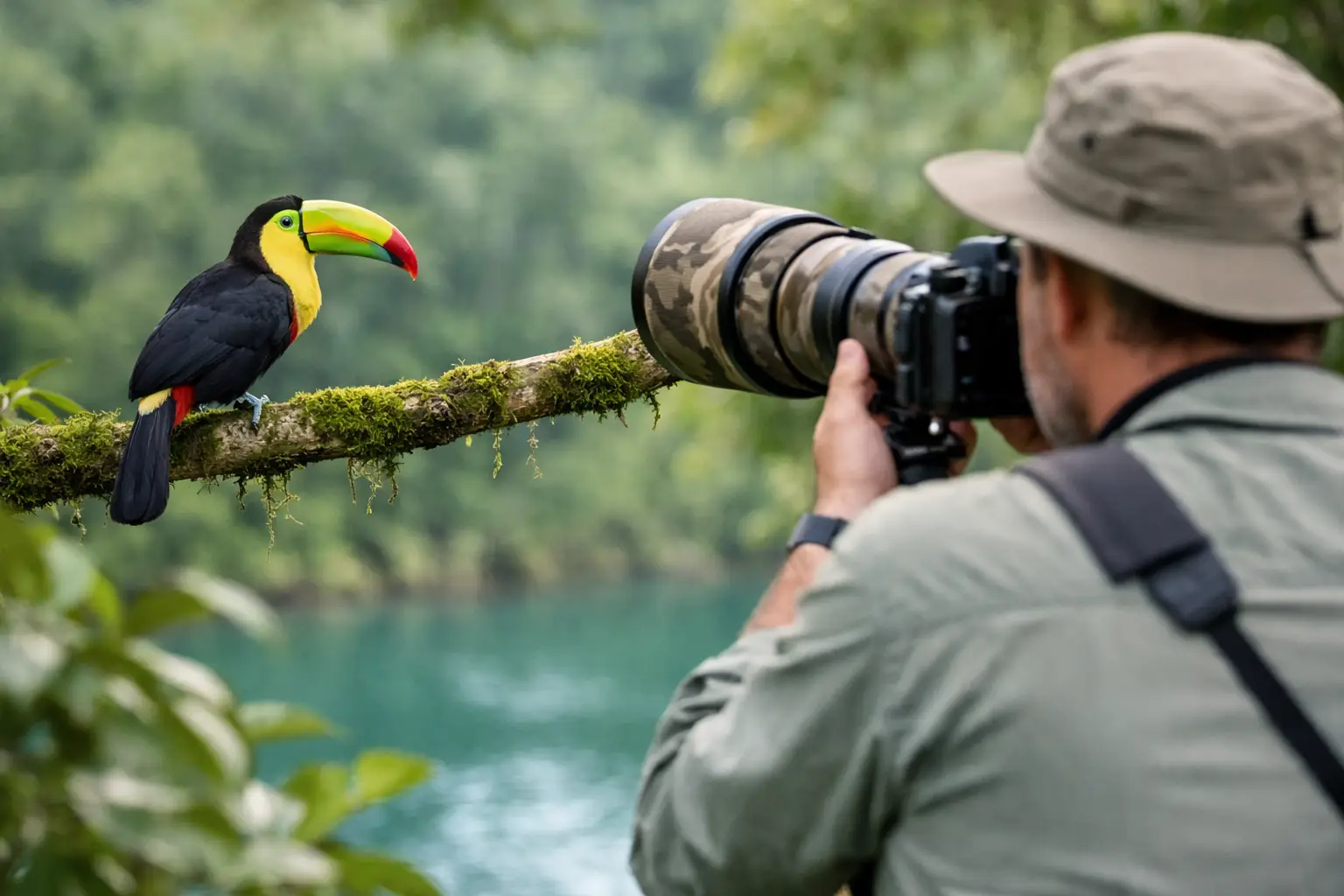
A toucan’s bill catches the first clean light of morning, then it disappears behind a curtain of leaves before most visitors have raised a camera. That is the rhythm of bird photography here. Learning how to photograph birds in Belize is less about chasing a long species list and more about slowing down, reading the forest, and being ready when a brief opening appears.
Belize rewards patient photographers with more than colorful birds. A quiet inland morning can bring the hollow wingbeat of a great curassow, the sharp call of a keel-billed toucan, hummingbirds working flowering shrubs, and raptors circling above the canopy. The challenge is that the same jungle that holds this life can make it difficult to see, focus, and expose well. A few practical choices make a real difference.
Start Early and Work With Belize Light
The best bird activity often happens shortly after daybreak, when temperatures are cooler and birds are feeding, calling, and moving through familiar routes. Early light is also kinder to photographs. It is softer, warmer, and less likely to create the deep shadows that arrive quickly under a tropical canopy.
Plan to be in position before the forest gets fully active. This does not mean rushing from place to place. Choose a productive trail edge, a clearing near fruiting trees, or a quiet stretch of water, then stay long enough for birds to become comfortable with your presence. In Belize, stillness is often more productive than constant walking.
Midday is not always a lost cause. It can be a good time for birds at shaded forest edges, near water, or around flowering plants where hummingbirds continue feeding. Use the brighter conditions for environmental images that show a bird in its jungle setting, rather than expecting every frame to be a tight portrait with a smooth background.
Rain is part of the experience, especially during the wetter months. A light rain can bring a fresh, saturated look to leaves and feathers, while a downpour may quiet the forest for a while. Keep a rain cover or dry bag close, protect your lens when moving between locations, and avoid changing lenses in wet, exposed places.
Bring Gear That Works in the Jungle
A long lens helps, but the biggest lens is not automatically the best one for Belize. Dense vegetation can make very long focal lengths difficult to aim and slow to handle. For many travelers, a 100-400mm or 150-600mm zoom offers useful reach and flexibility. If you are carrying a smaller camera, a telephoto zoom in the equivalent 300mm to 600mm range can still produce excellent results.
A fast aperture is helpful in dim forest conditions, but technique matters just as much. Modern cameras handle higher ISO settings well, and a sharp photo with a little noise is far better than a blurred photo at a low ISO. Bring extra batteries, because heat, humidity, image review, and long days in the field can drain power faster than expected.
A monopod can be useful on wider trails and near open wetlands, though it is not essential. In tight jungle, handholding is often more practical. Wear a comfortable strap, keep your lens hood on for protection from glare and light rain, and carry a small microfiber cloth. Humidity and sudden showers make lens maintenance part of the day.
How to Photograph Birds in Belize’s Different Habitats
Belize offers distinct birding environments within a relatively small area. Each one calls for a slightly different approach.
In the forest and canopy
The forest is where patience pays off. Birds may be close but partly hidden, or high overhead with only a clear view for a few seconds. Look for movement, listen for calls, and scan gaps in the leaves rather than trying to inspect every branch.
When a bird is blocked by vegetation, resist the urge to push closer through the brush. A small change in your position may open a cleaner sightline without disturbing the bird. Sometimes a leaf in the foreground adds depth and a sense of place. Other times, it covers the eye and ruins an otherwise strong frame. Move carefully and wait for the bird to shift.
Along rivers, lagoons, and wet areas
Water creates opportunities for herons, kingfishers, egrets, jacanas, and other species that may be easier to photograph than canopy birds. Here, backgrounds can be cleaner, reflections can add interest, and birds sometimes return to the same perch more than once.
Watch the light on the water. Bright reflected glare can fool your camera meter and leave a bird underexposed. Check your histogram or image review, then use exposure compensation if needed. A small adjustment can preserve feather detail, especially on white birds such as egrets.
At fruiting and flowering trees
A fruiting tree can become the center of activity, drawing toucans, tanagers, oropendolas, and other feeding birds. Flowering plants may attract hummingbirds that follow repeated routes. Instead of following every movement, find a clean angle with a pleasing background and pre-focus on a likely perch or feeding spot.
This is one of the best situations for creating images with intention. Notice where the bird lands, where the light falls, and whether branches are cutting across the frame. Give the bird space, remain quiet, and let its behavior guide your timing.
Use Simple Camera Settings You Can Adjust Quickly
Bird photography is fast, especially when a bird launches from a branch or crosses an opening in the canopy. Start with continuous autofocus and a burst mode that gives you several frames without filling your card instantly. Use an autofocus point or small focus area when branches are busy, since a wide focus area may grab the nearest leaf instead of the bird.
For perched birds, aim for at least 1/500 second. Increase that speed for active birds, hopping species, or anything likely to take flight. Hummingbirds and birds in flight usually need 1/1600 second or faster, depending on the look you want. A slightly slower shutter speed can show motion in wings, while a faster speed freezes detail.
Set your aperture according to the scene. Wider apertures help separate a bird from a cluttered background, but they can leave part of a large bill or body out of focus when you are close. Around f/5.6 to f/8 is often a practical range. Let ISO rise as needed to protect shutter speed, particularly in the forest.
The eye matters most. If the eye is sharp and visible, a photograph can still feel strong even when the tail or wing falls slightly out of focus. If a branch blocks the eye, wait for another angle or another moment.
Let Bird Behavior Set the Pace
Good wildlife photography starts with respect. Do not play bird calls repeatedly to draw a subject closer, crowd a nest, block a bird’s path, or push through habitat for a few extra feet of reach. A photo is never worth making a bird abandon a feeding area or spend energy reacting to people.
Stay on established paths where possible, speak quietly, and give birds a chance to decide their own distance. If a bird stops feeding, gives alarm calls, repeatedly looks toward you, or moves away, back off. These small choices are especially meaningful in quiet inland areas where wildlife is part of the experience, not a prop.
Wear neutral colors, move slowly, and avoid sudden lens movements. A bird will often tolerate a still person more readily than someone stepping forward every few seconds. Families and small groups can do well together if everyone understands the plan: stop, listen, look, and let one person move into position at a time.
Choose Local Knowledge Over a Rushed Checklist
A knowledgeable local guide can help you recognize calls, identify productive habitat, and understand when conditions are right for certain species. Just as valuable, a guide can lead you to quieter areas where you can photograph without competing with a crowd or feeling pressured to move on too quickly.
At Belize Inland Tours, private inland outings create room for that slower approach. The goal is not to promise every bird on a wish list. It is to spend time in the right places, safely and respectfully, with someone who understands the rhythms of the forest, caves, waterways, and surrounding wildlife.
Build extra time into your day whenever possible. The most memorable frame may come after the planned stop is over: a toucan calling from a sunlit branch, a motmot sitting low beside a trail, or a kingfisher returning to the same waterside perch. Keep your camera ready, keep your distance, and let Belize reveal itself at its own pace.
