

 Uncategorized
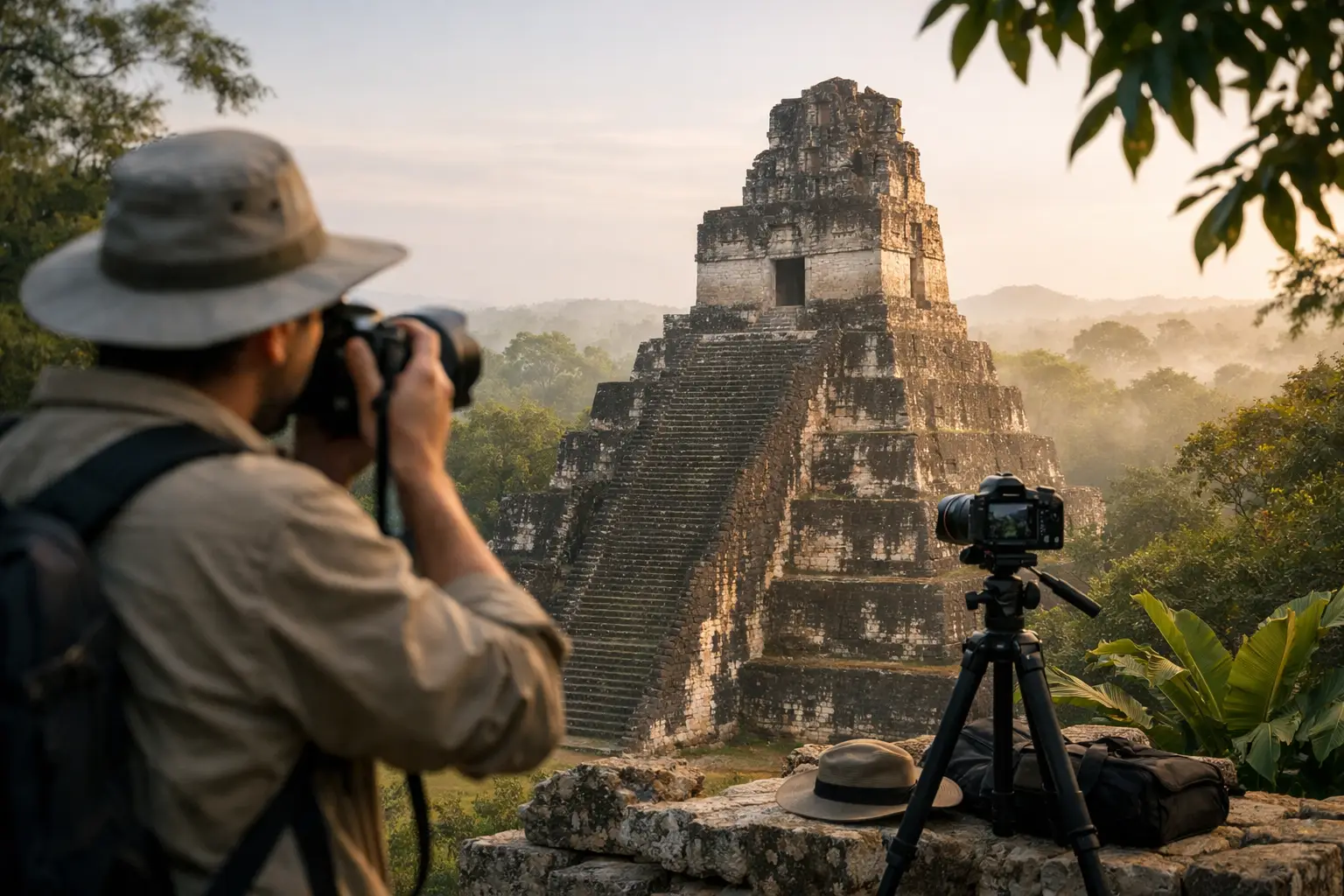
A Maya temple does not need dramatic editing to feel powerful. Stone steps rising from the forest, carved details softened by age, and the sound of birds beyond the plaza already tell a story. The best Maya temple photography in Belize begins when you slow down, learn what you are looking at, and photograph the site as a living cultural landscape rather than a backdrop.
For travelers who prefer a quieter inland experience, an early private visit can make a real difference. Fewer people in the frame means more room to work patiently, but it also gives you time to hear the history behind the structures and notice the small details that hurried groups often miss.
Start With Respect for the Site
Maya archaeological sites are places of deep cultural importance, not abandoned movie sets. The temples, plazas, stelae, and surrounding forest hold the work, beliefs, and history of generations of Maya people. A strong image should reflect that significance.
Stay on marked paths and follow the directions of your guide and site staff. Access rules vary by site and can change to protect fragile stonework, excavation areas, and visitor safety. If a structure is closed for climbing or roped off, a longer lens and a thoughtful composition will serve you better than trying to get closer.
Avoid sitting, standing, or placing camera bags on monuments. Do not move stones, leaves, or artifacts to make a cleaner image. Even a small adjustment can affect an archaeological context or damage something that has lasted for centuries. The goal is to leave the place exactly as you found it.
People also deserve consideration. Ask before making close portraits of local visitors, workers, or fellow travelers. If your guide shares cultural knowledge, listen first. That context often changes the photograph you choose to make.
Plan Maya Temple Photography Around the Light
Belize’s tropical light can be beautiful and demanding. Midday sun is strong, shadows inside carved recesses become dark, and pale limestone can lose detail quickly. When your schedule allows, photograph early in the morning or later in the afternoon, when light is softer and more directional.
Morning works especially well in the jungle. A little mist may hang between trees, birds are active, and the stone can take on a warm, gentle color before the day heats up. Afternoon can bring richer contrast and longer shadows across stairways and plazas. Neither is automatically better. It depends on the temple’s orientation, tree cover, weather, and the kind of mood you want.
On a bright day, do not fight every shadow. Deep shade beside sunlit stone can communicate the feeling of a forest site. Expose carefully for the highlights, especially on pale staircases, and lift darker areas later only if the image needs it. If your camera allows it, shooting in RAW gives you more room to handle Belize’s high-contrast conditions.
Cloud cover is not a reason to put the camera away. Overcast light can reveal texture in carvings and stone surfaces without harsh glare. It is also useful for portraits, details, and wider scenes where you want the temple, foliage, and sky to hold an even exposure.
Work With the Forest, Not Against It
A Maya site in Belize is rarely just architecture. Roots, palms, broadleaf canopy, birds, insects, and changing light are part of the experience. Instead of trying to crop out every branch, use the forest to show scale and setting.
Frame a structure through leaves or between tree trunks when it adds depth. Look for a trail leading toward a plaza, a shaft of light on weathered stone, or the contrast between geometric architecture and the irregular shapes of the jungle. These elements help an image feel like Belize rather than an isolated ruin photographed anywhere.
Be patient with wildlife. A bird crossing the frame can add life, but never chase it, call it in, or step off the trail for a shot. Your guide can help you understand what you are seeing while keeping the experience safe and low-impact.
Choose Compositions That Show Scale
The first instinct is often to stand directly in front of a temple and photograph the entire structure. Take that image, then move. Walk the edges of the plaza, change your height, and study how the steps, corners, and surrounding trees reshape the scene.
A wide lens is useful for capturing a large temple in a tight forest setting, but it can make distant structures look smaller than they felt in person. Move closer rather than relying only on an ultra-wide angle. Keep the camera level when possible so the walls and stairways do not appear to lean unnaturally.
A moderate zoom lens is often more versatile than travelers expect. It can isolate a carved element, layer steps against foliage, or compress a distant structure against the canopy. Detail photographs matter: worn edges on stone, patterns of lichen, drainage features, and the deliberate geometry of a staircase all add depth to a final collection.
If you photograph a travel companion, use them thoughtfully for scale. Place them on an approved path or in an open plaza, never on a restricted monument. A small figure facing the temple can convey awe without turning the site into a posed social media scene.
Carry Less Gear and Be Ready for Weather
You do not need a large kit to make memorable photographs. A camera or phone you know well, a fully charged battery, a clean lens cloth, and protection from rain are more valuable than equipment you will not want to carry through the heat. Humidity, sudden showers, and dusty trails are normal parts of inland Belize.
A small weather-resistant bag is practical, but keep it easy to open. Condensation can form when moving between cool vehicles and warm jungle air, so give your gear a few minutes to adjust before shooting. A lens hood helps with both flare and light rain. For phones, a simple dry pouch can provide peace of mind during a wet-weather outing.
Tripods are useful only when permitted and when they will not block paths or other visitors. In many situations, handheld photography is the better choice. Use a faster shutter speed for sharp images in low forest light, and do not be afraid to raise your ISO when needed. A slightly grainy photograph is better than a blurred one.
Let a Local Guide Improve the Story
The difference between seeing a temple and understanding it is often the person walking beside you. A knowledgeable local guide can explain where ceremonies may have taken place, how a plaza connected different structures, and why a particular feature matters. That knowledge helps you recognize photographs worth making.
It can also help you plan your time. Guides know which areas become busy, where the light arrives first, and how weather can affect trail conditions. On a private excursion, there is more freedom to pause for a composition, wait for people to clear a frame, or spend a few extra minutes with a structure that catches your attention.
Belize Inland Tours approaches Maya sites as part of a wider inland experience – one that includes the forest, local knowledge, and a pace that leaves room for genuine observation. That quieter approach is often the best camera accessory you can bring.
Photograph the Experience Beyond the Temple
Your strongest set of images may not be only the grandest views. Photograph the trail before you arrive, the pattern of light on the path, your guide pointing out a feature, or the first view of stone through the trees. These images create a fuller visual story and preserve how the day actually felt.
Before leaving, take one final moment without the camera. Listen to the forest, look across the plaza, and notice the scale of the work before you. The photographs will carry more meaning when the memory behind them is just as clear.

