

 Uncategorized
A Belize cave can change the pace of a trip quickly. One moment you are walking beneath jungle canopy; the next, your headlamp catches the shape of limestone walls, clear water, and passages used by the Maya centuries ago. Good sacred cave tour preparation helps you arrive ready for that shift – physically comfortable, mentally present, and respectful of a place that carries real cultural meaning.
For many travelers, the concern is not whether the experience will be memorable. It is whether they are prepared enough to enjoy it. The answer usually comes down to choosing the right tour, packing for water and uneven ground, and listening closely to your guide. You do not need to be an extreme athlete to experience Belize’s caves, but you should expect a real outdoor adventure rather than a polished attraction.
Understand What Makes a Cave Sacred
Not every cave visit is the same. Some Belize caves are ideal for floating or paddling through broad river passages. Others involve hiking, wading, scrambling over limestone, or visiting chambers connected to Maya ceremonial life. A sacred cave tour may include cultural interpretation alongside the physical adventure, helping visitors understand why caves were viewed as entrances to the underworld and places of communication with ancestral and spiritual forces.
That context changes how you move through the space. This is not a place to climb on formations, touch artifacts, remove stones, or treat the cave as a backdrop for noisy entertainment. A thoughtful guide will explain what you are seeing, where you may walk, and why certain areas need extra care.
It also means managing expectations. Some caves hold artifacts or features that are best viewed from a respectful distance. The most meaningful experience is not always the one with the most physical access. It may be standing quietly in a chamber while your guide explains how the Maya understood the landscape around you.
Choose the Right Level of Adventure
Before booking, ask what the day actually involves. “Cave tour” can mean a gentle float with short walks, a kayak route through calm water, or a more demanding journey that includes swimming and uneven terrain. A private tour gives your group more room to move at a comfortable pace, ask questions, and avoid feeling pushed along by a large crowd.
Be honest about your group’s comfort level. Families with younger children, travelers who are not confident swimmers, and guests recovering from injuries may be better suited to an easier cave tubing or accessible river cave experience. Active travelers may prefer a route with hiking, wading, and longer time underground. There is no prize for choosing the hardest option. The right trip is the one that lets everyone stay safe and engaged.
Share relevant information with your operator before the tour, including mobility limitations, medical concerns, fear of tight spaces, or uncertainty in water. Guides can often recommend an appropriate route or explain where the real challenges are. A narrow section, steep trail, or deep-water crossing is far easier to handle when you know about it before leaving your hotel.
What to Wear for a Belize Cave Tour
Cave conditions are cooler and darker than the jungle outside, but Belize is still tropical. Wear clothing that can get wet, muddy, and rubbed against rock without becoming uncomfortable. A lightweight quick-drying shirt and shorts or leggings work well for most water-based outings. Avoid cotton if possible, since it stays heavy and cold once wet.
Your footwear matters more than many visitors expect. Closed-toe water shoes or sturdy sandals with a secure heel strap protect your feet on wet limestone and uneven trails. Flip-flops are a poor choice because they slide, catch easily, and can float away in moving water. For hiking-focused cave trips, ask whether trail shoes are better than water shoes.
Bring a swimsuit or wear it beneath your tour clothes if the route includes swimming, tubing, or wading. A dry change of clothes for the ride back is one of the small details that makes a full day in the jungle more comfortable. Keep valuables to a minimum, and leave passports, expensive jewelry, and anything you would hate to lose at your accommodation.
Pack Light, but Pack With Purpose
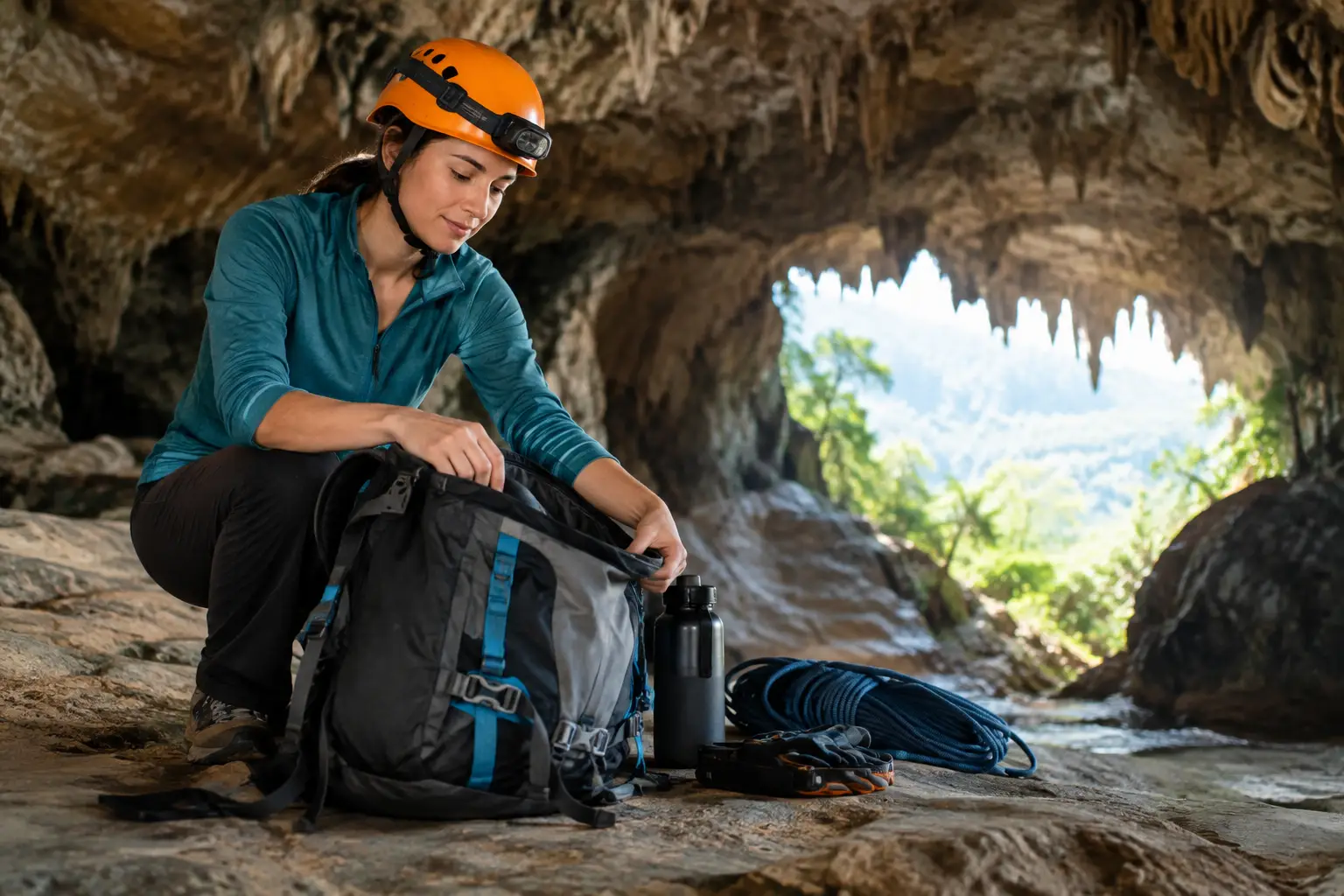
Most cave tours do not require a large daypack. In fact, bulky bags can be inconvenient in water or narrow passages. Your guide or operator may provide required safety equipment such as helmets, life jackets, tubes, paddles, or headlamps, so confirm what is included rather than bringing unnecessary gear.
A few items earn their place every time:
- A reusable water bottle for the trail and transfer
- Reef-safe sunscreen and insect repellent for time outside the cave
- A small towel and dry clothes for afterward
- A secure waterproof case or dry bag for essential items
- Prescription medication, if needed, packed in a waterproof container
Do not assume your phone will take reliable cave photos. Low light, moisture, and uneven footing can make photography distracting. If you bring a camera, use a secure strap or waterproof housing and take photos only when your guide says it is appropriate. The best moments in a sacred space are often the ones you experience without looking through a screen.
Prepare Your Body for the Day
You do not need special training for many Belize cave tours, but basic preparation makes the experience more enjoyable. Get a decent night of sleep, eat a balanced breakfast, and begin hydrating well before departure. Humidity, hiking, and excitement can catch up with travelers who have only had coffee and a pastry.
If your tour includes swimming or floating, tell your guide your comfort level in water. A life jacket is not a sign that you are inexperienced. It is standard safety equipment and lets you relax enough to appreciate the surroundings. On more active routes, take your time over slippery surfaces and use handholds only where your guide directs you. Limestone can be sharp, polished smooth, or unexpectedly slick depending on the section of cave.
Travelers who experience claustrophobia should not automatically rule out caving. Many Belize cave systems have large chambers and open river passages rather than tight crawl spaces. Still, ask specific questions about enclosed areas, time underground, and exit options. Clear information is better than pushing through discomfort on the day.
Respect the Cave, Your Guide, and the Group
Sacred cave tour preparation is also about mindset. Belize’s cave systems are living natural environments and, in many cases, cultural landscapes tied to the Maya past. Formations can take thousands of years to develop. Artifacts, bones, ceramics, and modified spaces can hold archaeological value that is lost when disturbed.
Follow the established route, keep your hands off formations, and never pocket a souvenir. Even a small stone removed from a protected area changes the site. Watch where you step, especially when your guide points out sensitive ground or directs the group to stay together.
A quiet approach serves everyone. It helps the group hear interpretation and notice the details: dripping water, bats in distant chambers, the texture of mineral deposits, and the sudden silence that makes cave spaces feel so separate from the forest outside. Wildlife encounters are possible, but should never be forced. Your guide knows how to move through these habitats with minimal disturbance.
Why a Local Guide Makes the Difference
A cave is not the place to improvise. Conditions can change with rainfall, water levels, and trail conditions, especially during Belize’s wet season. Licensed local guides make decisions based on what the landscape is doing that day, not simply what was planned on a booking calendar.
They also provide the interpretation that turns a dark passage into a meaningful journey. The difference between seeing a limestone chamber and understanding its geological and Maya cultural context is significant. With Belize Inland Tours, private inland experiences allow more time for questions, a pace that suits your group, and a calmer connection to places that large tours can rush past.
Ask about weather policies, physical requirements, equipment, transportation, and what happens if conditions require a route change. A professional operator will answer directly. Flexibility is part of responsible adventure travel, especially around rivers and caves.
When the time comes to step beneath the jungle and into the cool dark, let preparation give you confidence rather than a checklist to worry about. Wear the right shoes, carry only what you need, listen to your guide, and leave room to be surprised. Belize’s caves reward travelers who arrive ready to move carefully and look closely.
