
 Uncategorized
A cave can feel completely different depending on how you enter it. Arrive with a large group on a tight schedule, and the experience may become a line of helmets, hurried photos, and little time to notice the water, rock formations, or forest sounds outside. Choose a more thoughtful approach, and there is room to listen, ask questions, and understand why the place matters. That is the real difference in sustainable tours versus mass tourism.
Belize is known for reefs, rivers, caves, jungle, wildlife, and Maya sites. Those landscapes are generous, but they are not unlimited. Travel brings meaningful income and connection when it is handled well. When visitor volume outruns care, however, the same places people come to admire can lose the quiet, health, and cultural depth that made them special.
Sustainable Tours Versus Mass Tourism: The Real Difference
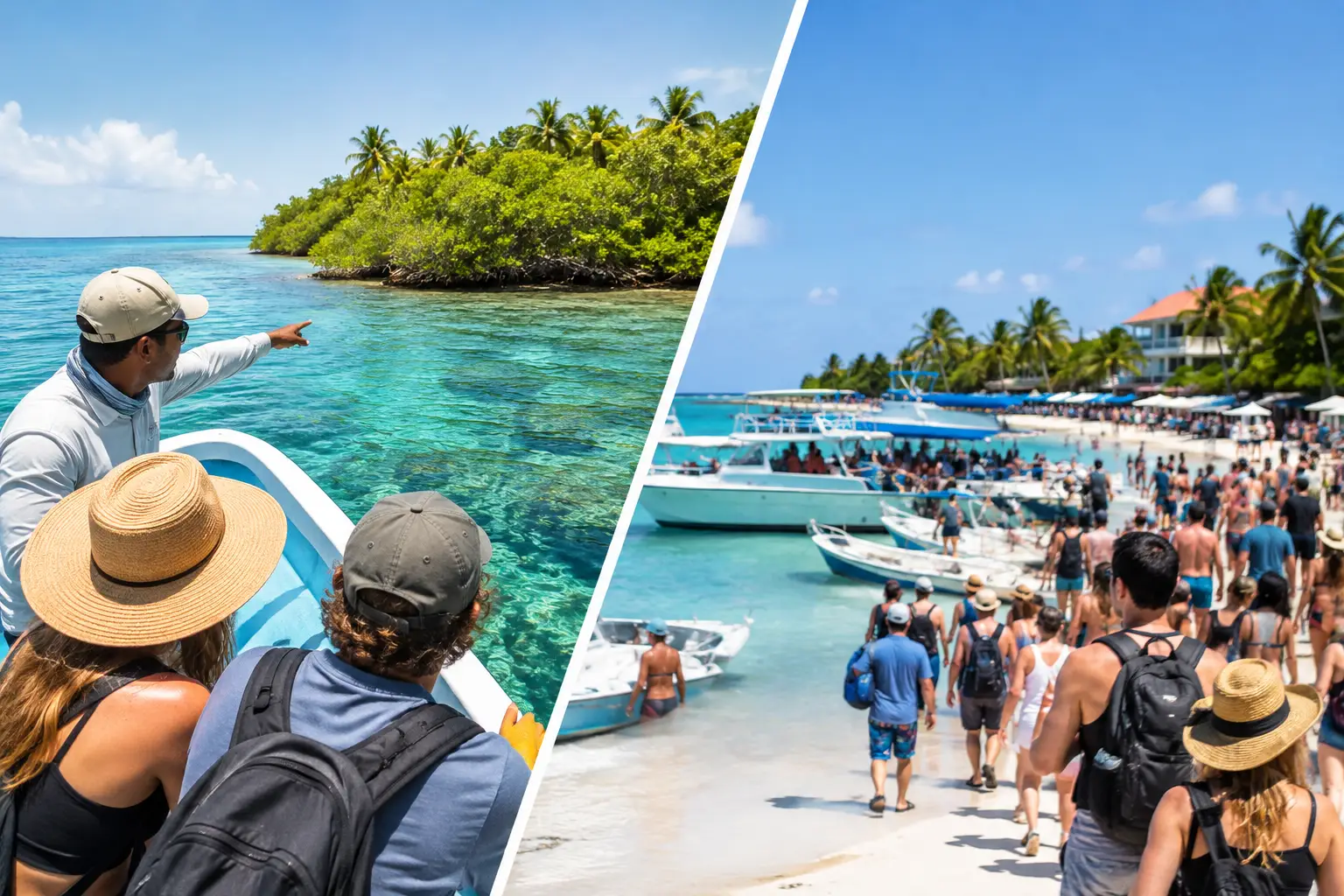
Mass tourism is not simply tourism with more people. It is a model built around moving high numbers of visitors through an attraction as efficiently as possible. It can make travel more accessible and support many jobs, especially in popular destinations. But it often relies on fixed schedules, large groups, standardized stops, and limited time for genuine interpretation.
Sustainable tours place more attention on the condition of the destination and the quality of the guest experience. They tend to work with smaller groups, local guides, flexible pacing, and routes chosen with care. The goal is not to keep visitors away from Belize’s best places. It is to help people experience them without treating nature and culture as something to rush through.
A private cave kayaking trip, for example, has a different footprint and rhythm than a large convoy moving through the same system. Fewer voices carry through the chambers. A guide can point out how to move safely, where not to step, and what the cave’s features reveal about the landscape. Guests can absorb the experience instead of following the back of a crowd.
That said, small does not automatically mean sustainable. A private excursion still needs a knowledgeable guide, appropriate safety practices, respect for park rules, and an operator that understands the limits of the environment. Sustainability is a set of choices, not a label added to a brochure.
Why Crowds Change the Experience
In Belize’s inland environments, crowd levels affect more than a photo opportunity. Wildlife is sensitive to noise and repeated disturbance. Trails can erode when heavily used, especially after rain. Cave floors and formations can be damaged by careless contact. Archaeological sites deserve the same patience and respect as any living landscape.
Crowded tours also change what travelers are able to learn. When a guide is responsible for a large group, it is harder to answer individual questions or adjust the pace for a family, couple, or first-time adventurer. Important stories can be reduced to a few quick facts between stops.
A smaller guided outing gives the experience room to breathe. You may pause when a bird call comes from the canopy, spend longer at a Maya structure, or take time to understand how a spring-fed pool connects to the surrounding forest. These moments are not extras. They are often what travelers remember years later.
At Belize Inland Tours, private inland experiences are designed around this kind of connection: personal guiding, quieter settings, and enough time to experience caves, jungle, wildlife, and heritage with care. It is a better fit for travelers who would rather leave with a story than a checklist.
Where the Money Goes Matters
Environmental care and community benefit are closely connected. A tour can only be truly sustainable if the people who know and live near a destination have a meaningful role in its success.
Locally guided tours keep more knowledge and economic value close to the place being visited. Guides explain the history behind a ruin, identify plants used in traditional practices, and share the practical realities of living alongside Belize’s forests and rivers. Their perspective cannot be replaced by a generic script.
Choosing local operators can also support drivers, guides, cooks, park staff, small businesses, and families in the surrounding area. This does not mean every large company is careless or every small company is perfect. It means travelers should look beyond price and ask who is leading the trip, how the operation works, and whether local expertise is treated as central rather than decorative.
Cultural respect matters just as much at Maya sites. These are not backdrops for a quick social media post. They are places connected to sophisticated histories, living communities, and ongoing archaeological work. A good guide helps visitors see more than stone structures. They provide context about the people, trade, agriculture, beliefs, and landscapes that shaped the site.
What Responsible Adventure Looks Like in Practice
Responsible travel does not have to feel restrictive. It usually makes an outing more rewarding because it encourages travelers to pay attention. In Belize, this can be as simple as following your guide’s instructions around water, staying on established paths, carrying out what you bring in, and giving wildlife the space it needs.
For caves, responsible behavior means avoiding fragile formations, using suitable equipment, and never entering conditions that are unsafe because of weather or water levels. For jungle hikes, it means accepting that wildlife sightings cannot be guaranteed. A guide may choose a quieter route or ask the group to lower their voices because the forest is not a theme park.
The same principle applies to timing. The busiest departure time is not always the best time. An experienced local guide may recommend an earlier start, a different route, or a less-visited location based on weather, season, and current conditions. That flexibility is part of responsible travel, and it often leads to a more comfortable day as well.
How to Choose a Better Belize Tour
Travelers do not need to be experts in conservation to make better choices. Start by looking for operators that are licensed, clear about safety, and specific about what the day involves. Vague promises of an “eco-friendly” experience are less useful than practical details about group size, guide experience, park access, transportation, and how the tour adapts to conditions.
Ask whether the tour is private or shared, how many people may be in the group, and whether the operator works with local guides. Find out if there will be time to learn about the place rather than simply stop for photos. If you are traveling with children, older relatives, or people with different comfort levels, ask about the physical demands honestly. The right tour is not the most intense one. It is the one that allows everyone to enjoy Belize safely and respectfully.
Price deserves context, too. A low-cost mass excursion may appear attractive at first, but it can come with crowded transport, limited flexibility, and less individual attention. A private or small-group experience may cost more because it includes dedicated guiding, customized pacing, and a more direct relationship with the destination. The best value depends on what kind of day you want to have.
A Better Kind of Memory
The most meaningful Belize adventures are rarely the loudest ones. They are the moments when you float beneath a limestone ceiling and hear water dripping in the dark, when a guide notices a toucan before you do, or when a Maya site becomes more than a name on an itinerary.
Choose the tour that leaves room for those moments. Travel with curiosity, listen to the people who know the land, and let Belize set the pace.
