
 Uncategorized
Standing beneath the high stones of Xunantunich or walking the quiet plazas at Caracol, the last thing you want is a surprise at the gate. So, do Maya ruins require tickets? In Belize, most major archaeological sites do charge an admission fee, but the details depend on the site, who is managing it, and whether you are visiting independently or with a guide.
The good news is that entry is usually straightforward. A little planning lets you spend less time sorting out logistics and more time noticing the carved monuments, forest sounds, and long human story held within these places.
Do Maya Ruins Require Tickets in Belize?
Most well-known Belize Maya ruins require a paid entry ticket. Sites such as Xunantunich, Caracol, Lamanai, Altun Ha, Cahal Pech, and Nim Li Punit are protected archaeological reserves, with admissions supporting their upkeep and management. You typically buy entry at or near the site entrance on the day of your visit.
A ticket is not the same as a guided tour. Admission gives you access to the reserve and its marked areas. A guide adds the context that makes a ruin feel less like a collection of impressive stones and more like a living former city. You learn why a temple faces a certain direction, how rulers used plazas, what the stelae recorded, and how trade connected Belize to the wider Maya world.
For many travelers, the question is really not whether to buy a ticket. It is whether to arrange the visit independently or have entry handled as part of a private guided day. Both can work well, depending on your pace, transportation, and interest in interpretation.
What Your Entry Fee Usually Covers
At a government-managed archaeological reserve, admission generally covers access to the ruins, maintained walking paths, visitor facilities where available, and basic site oversight. It does not automatically include transportation, a guide, food, drinks, or the gear needed for a combined jungle or cave experience.
Entry fees can change, and some sites have different rates for Belize residents, nonresidents, children, and students. Smaller sites may also operate on more limited schedules. Rather than relying on an old social media post or a guidebook printed years ago, confirm the current cost and opening hours shortly before your visit.
Bring Belize dollars or US dollars in small bills when possible. Card acceptance is not something to assume at remote inland locations, and a weak signal or power interruption should not be allowed to derail a day you have been looking forward to.
Tickets Vary by Site and Route
Belize is compact on a map, but jungle roads, river transfers, ferry crossings, and weather can change the rhythm of a day. Ticket planning looks a little different at each major ruin.
Xunantunich
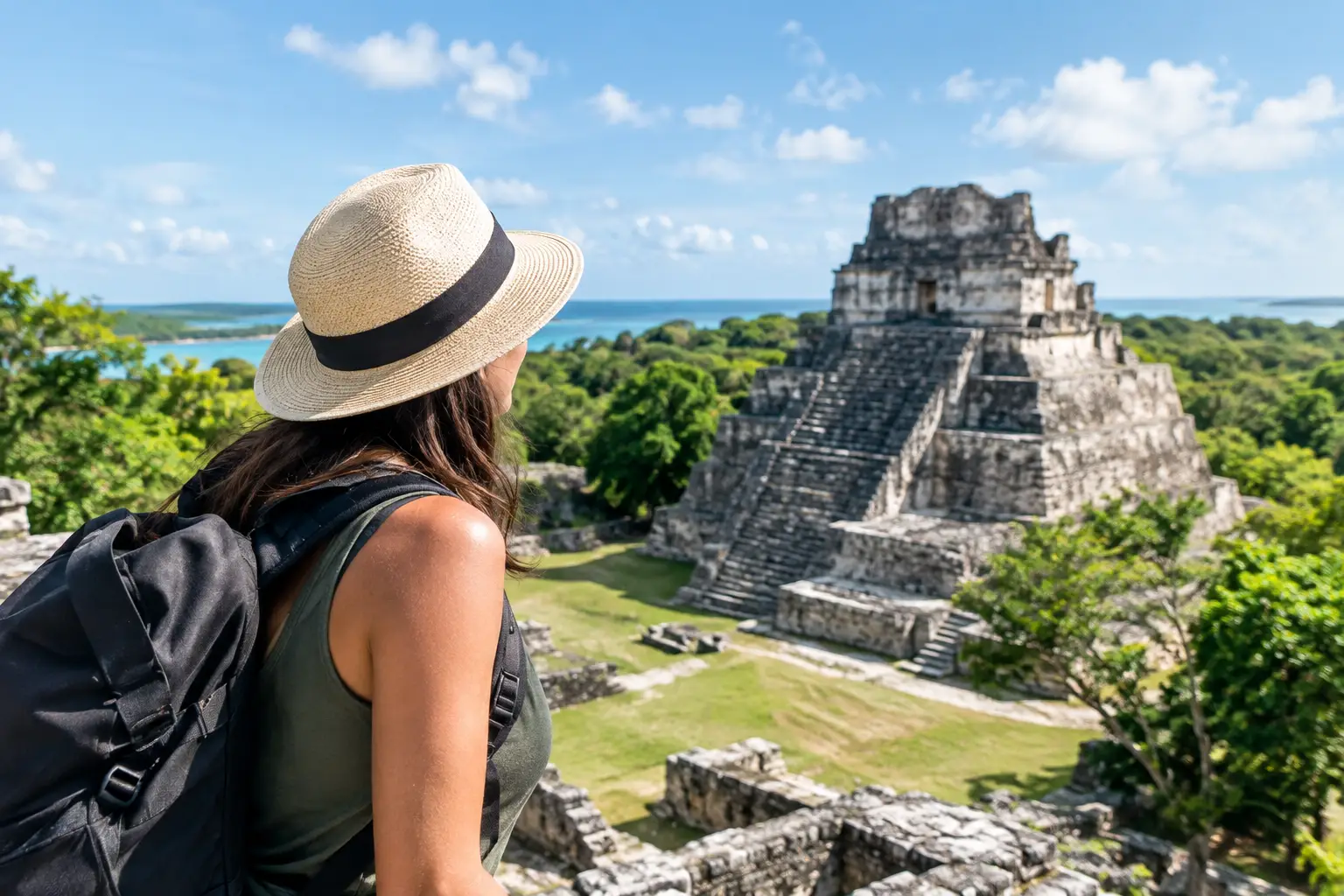
Xunantunich is one of the easiest Maya sites to visit from western Belize. Reaching it includes a short hand-cranked ferry crossing over the Mopan River, followed by the reserve entrance and admission process. The site is known for El Castillo, a tall temple with wide views across the Cayo countryside and toward Guatemala on a clear day.
Because it is accessible, Xunantunich can be busy around peak arrival times. An early visit or a thoughtfully timed private tour can make a meaningful difference. The ticket gets you inside; a guide helps you move beyond the postcard viewpoint and understand the city below it.
Caracol
Caracol is a very different kind of visit. It is Belize’s largest known Maya city and sits deep in the Mountain Pine Ridge area. The entry ticket is only one part of the plan. The drive is long, roads can be rough in places, and a visit works best when transportation, timing, lunch, water, and road conditions have been considered in advance.
Caracol rewards travelers who want a full inland day rather than a quick stop. Its broad plazas and massive structures feel remarkably remote, especially when you take time to walk beyond the first major temple complex. Here, experienced local guidance is as valuable as the ticket itself.
Lamanai
Lamanai is often reached by boat, which makes the journey part of the experience. The route can pass lagoons, riverbanks, and wildlife habitat before the forest opens around the ruins. Admission may be handled at the site, while the boat transfer and guide are arranged separately or bundled through your tour operator.
This is a good example of why travelers should ask what is included before booking. “Lamanai tour” can mean very different things: transport only, boat and admission, or a fully guided day with all logistics covered.
Smaller and community-connected sites
Not every Maya location follows the same model. Some lesser-visited sites, local museums, or community-managed cultural experiences may have a donation, a separate entrance charge, limited access, or no regular ticket booth at all. A few places are best visited only with a local guide because access, trail conditions, and cultural protocols are more specialized.
That does not make them less worthwhile. Often, quieter sites offer the unhurried feeling travelers hope for when they come inland. Just avoid assuming that every ruin works like a large, heavily visited attraction.
Should You Buy Tickets in Advance?
For most Belize archaeological sites, advance tickets are not usually necessary. Visitors commonly pay on arrival. The exception is not always the ruin itself but the tour around it. Private transportation, a boat, a licensed guide, or a limited-capacity itinerary may need to be reserved ahead of time, especially during busy travel periods.
If you are traveling independently, arrive with enough time before closing. Rangers may stop admitting visitors before the official closing hour so everyone has time to leave the grounds safely. This matters at larger sites where a temple, plaza, and forest trail can take longer to explore than expected.
If you are booking a guided outing, ask one clear question: Is archaeological site admission included in the quoted price? A professional operator will tell you directly whether fees are included, collected separately, or paid by the guide on your behalf. That clarity is particularly helpful for families and small groups who do not want to manage several small payments during the day.
Why a Guide Can Be Worth More Than the Gate Fee
Maya ruins are not theme parks, and their value is not measured by how many structures you photograph in an hour. They are archaeological places with sacred, political, and ecological layers. A knowledgeable guide can point out drainage systems, ancient reservoirs, ball courts, household areas, and the details on a stela that are easy to pass without noticing.
Guides also bring practical judgment. They know when a path is slick after rain, where shade is scarce, how to pace a climb, and how to keep a group comfortable in tropical heat. For travelers combining ruins with cave tubing, jungle hiking, or bird watching, local planning turns a crowded checklist into a day with room to breathe.
At Belize Inland Tours, private inland experiences are designed around that balance: meaningful interpretation, safe pacing, and routes that make sense for your group rather than a bus schedule. The goal is not to rush through Belize’s past. It is to meet it in the landscape where it happened.
Plan for a Better Ruins Visit
Wear shoes with grip, bring water, insect repellent, sun protection, and a light rain layer. Temple steps can be uneven, exposed, and steep. Follow posted rules, stay on designated paths, and never climb where access is restricted. These protections preserve fragile structures and help keep the site safe for the people who visit after you.
Give yourself permission to slow down, too. The strongest moments at a Maya site often happen between the headline structures: a howler monkey calling from the canopy, the feel of cool stone in the shade, or a guide explaining how a plaza once held ceremonies, markets, and daily life.
Tickets are a small practical part of visiting Belize’s Maya ruins. The real choice is how you want to experience the place. Plan for the entry fee, ask what your tour includes, and leave enough space in the day for the jungle and the old cities to speak for themselves.

