
 Uncategorized
A Maya temple rising above the jungle is not a backdrop, a climbing frame, or a collection of souvenirs waiting to be found. It is part of a living cultural landscape. This guide to archaeology tour etiquette will help you experience Belize’s ancient sites with the curiosity of an adventurer and the respect they deserve.
Belize offers an extraordinary chance to walk through former Maya cities, follow forest paths once used for trade and ceremony, and see stonework that has endured for centuries. A good visit is not about rushing from one structure to the next. It is about listening closely, moving thoughtfully, and leaving the site exactly as you found it.
Why Archaeology Tour Etiquette Matters
Archaeological sites are fragile by nature. Stone steps wear down, plaster surfaces erode, and small objects on the ground may hold information that has not yet been recorded. Even a casual touch, shortcut, or misplaced footstep can cause damage that cannot be repaired.
In Belize, Maya heritage is also not locked in the past. Maya communities remain an essential part of the country’s cultural life. The temples, plazas, tombs, ceramics, and carved monuments you encounter are connected to real traditions, histories, and identities. Treating a site respectfully is not simply following rules. It is recognizing that you are a guest in a place with deep meaning.
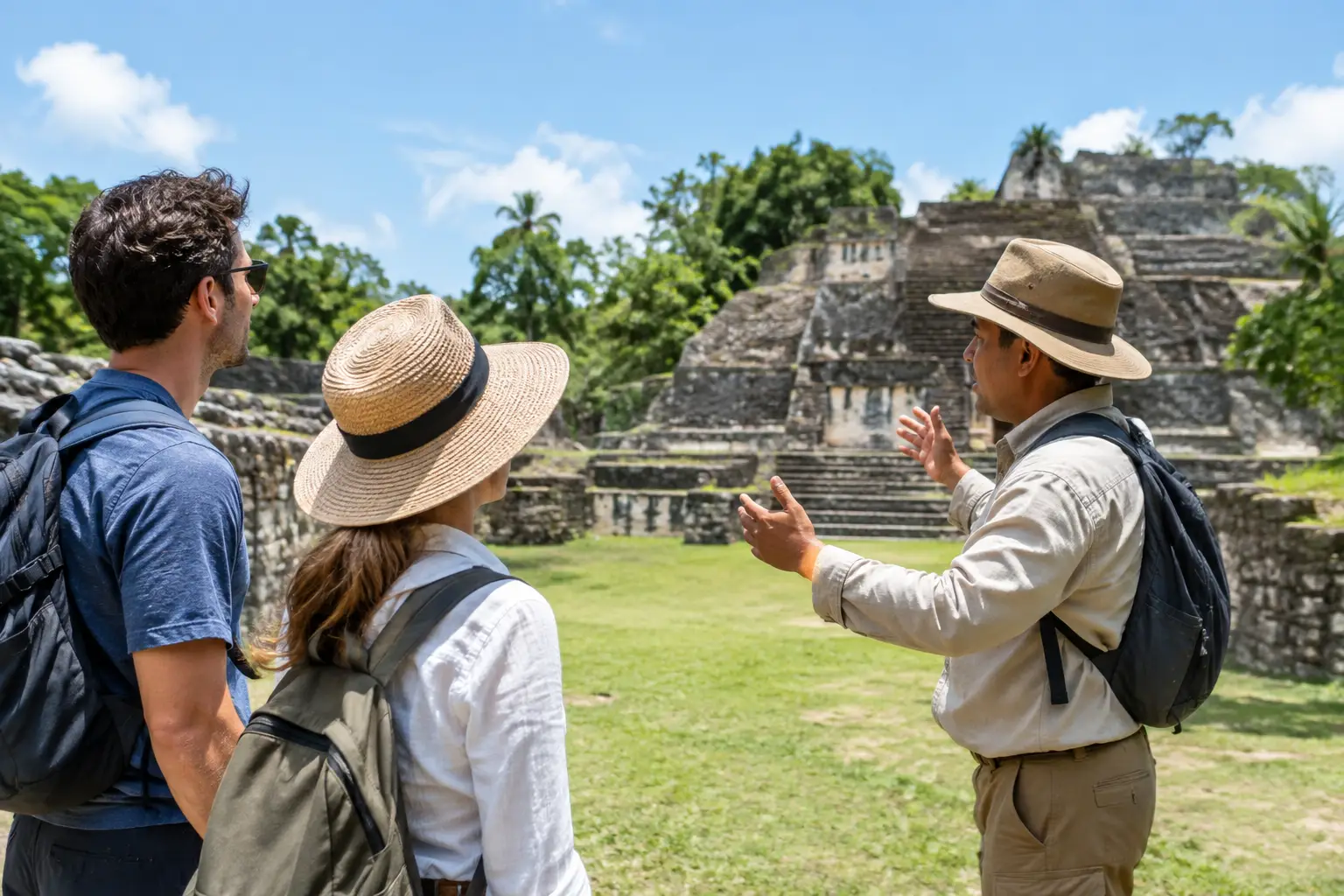
Your guide helps make that connection clear. On a private archaeology tour, there is room to ask why a building faces a certain direction, how archaeologists interpret a burial, or what daily life may have looked like in a former city. Those questions turn a photograph stop into a more memorable encounter with Belize.
Guide to Archaeology Tour Etiquette: Before You Arrive
Start by dressing for the site, not for a resort photo. Closed-toe shoes with reliable traction are the best choice for uneven paths, roots, loose stone, and occasional mud. Lightweight clothing, insect repellent, sun protection, and a refillable water bottle will make the day more comfortable without creating unnecessary waste.
Bring only what you can carry easily. Large bags can be awkward on narrow trails and around fragile structures. If you are carrying snacks, keep them sealed and take every wrapper back out with you. Monkeys, coatis, birds, and other wildlife do not need human food, and food scraps can change their behavior around visitor areas.
Arrive with a flexible mindset. A site may close a particular structure after rain, restrict access during conservation work, or change photography rules for a sensitive area. Those limits can feel disappointing when you have traveled a long way, but they are part of responsible preservation. The best tours work with the landscape and the site staff rather than against them.
Follow the Guide and Site Markers
Stay on established trails and follow the route set by your guide or park ranger. A path may look like a simple convenience, but it also protects unexcavated ground, native plants, and areas where artifacts may still be present beneath the surface.
Do not cross barriers for a better angle or step onto a structure marked as closed. Some ruins in Belize can be climbed where access is permitted, while others cannot. The difference often comes down to safety, stability, restoration needs, or cultural protection. It depends on the specific site and current conditions, so local guidance matters more than assumptions from a previous trip.
Keep a comfortable distance from your guide when they are explaining the site, particularly in a small group. You will hear more, ask better questions, and avoid blocking other visitors’ view of carvings or architectural details.
Look Closely, But Leave Everything in Place
The simplest rule is also the most important: take photographs, not artifacts. Never pick up pottery fragments, stone tools, beads, shells, or anything else you see on the ground. What appears to be a loose rock may be part of a feature, and its exact location can matter as much as the object itself.
If you notice something unusual, point it out to your guide without moving it. A fresh exposure after rain, a fragment along a trail, or an area that looks disturbed should be reported to site staff. Responsible visitors can help protect a place simply by being observant.
Avoid touching carvings, walls, painted surfaces, altars, or exposed masonry. Oils from hands, sunscreen, and insect repellent can affect delicate surfaces over time. Leaning on a wall for a photo may seem harmless, yet repeated pressure from thousands of visitors adds up quickly.
The same restraint applies to modern additions. Do not carve initials, stack stones, leave coins, tie ribbons, or place offerings unless a guide or community representative has specifically explained that a practice is appropriate. Personal gestures can unintentionally interfere with archaeology, local customs, or the experience of others.
Take Photos With Respect for Place and People
Belize’s Maya sites are striking, especially when morning light reaches the stone through the forest canopy. Take the photos you want, but do not let the camera turn the site into a prop.
Ask before photographing your guide, local staff, artisans, or other visitors, especially children. If a ceremony, blessing, or cultural gathering is taking place, keep your distance and follow instructions about photos and conversation. Not every meaningful moment needs to be captured.
Drones are a separate issue. They may disturb wildlife, interrupt other guests, and require authorization at protected areas or archaeological sites. Do not assume a small personal drone is allowed because you brought it from home. Ask in advance and accept a no without pressing the issue.
When taking your own photos, avoid climbing onto unstable edges, stepping beyond a barrier, or asking someone else to do so for a dramatic shot. The strongest image is never worth a fall or damage to a structure that has survived for generations.
Respect the Quiet of the Jungle
An archaeology tour in Belize is often also a nature experience. Howler monkeys may call from the canopy, birds may be active along the trail, and the forest may reveal details that are easy to miss when a group is loud.
Keep voices low when your guide is speaking and give wildlife space. Do not play music, shout to test an echo, or use a speaker for videos. Quiet makes it easier to hear the story of the site and makes the experience more enjoyable for other travelers.
If you are visiting with children, invite them into the experience rather than asking them to stay silent all day. Challenge them to spot a carved detail, listen for a bird call, or imagine where a marketplace may have stood. Clear, age-appropriate boundaries work better than scolding: stay with the group, do not touch the ruins, and tell an adult if you find something on the ground.
Ask Better Questions and Listen to Local Knowledge
Archaeology is not a finished story. New discoveries, improved dating methods, and different interpretations can change what experts understand about an ancient city. Your guide may explain what is known, what is likely, and what remains uncertain. That honesty is a strength, not a gap in the experience.
Ask about the people who lived at the site, the role of the surrounding forest, the meaning of architectural features, or how conservation is funded and carried out. These questions go beyond the familiar idea of “lost ruins” and bring the place closer to its human reality.
Be careful with language that treats Maya history as vanished. The ancient cities changed over time, but Maya people and cultures continue. A respectful guide will help you understand both the archaeological record and the living heritage connected to it.
At Belize Inland Tours, private experiences create time for this kind of conversation. Rather than being hurried through a crowded stop, guests can move at a comfortable pace, notice the details, and learn from guides who know the inland landscape firsthand.
Leave the Site Better Than You Found It
Before you depart, check the area around you for bottle caps, tissues, snack wrappers, or anything that may have slipped from a pocket. Use designated restrooms when available, and never leave waste along a trail or behind a structure.
A respectful visit does not require perfect expertise. It requires attention. Walk where you are asked to walk, listen when local guides share context, keep your hands off the past, and make room for the site to remain meaningful long after your own journey home.
The reward is a deeper kind of adventure: not just seeing ancient Belize, but helping protect the stories still held in its stone, soil, and jungle.
