
 Uncategorized
The jungle usually teaches this lesson fast: what feels like a casual walk on vacation can turn into a hot, muddy, bug-heavy, deeply rewarding adventure within the first fifteen minutes. If you are wondering how to prepare jungle hike plans the right way, the goal is not to pack for hardship. It is to set yourself up so you can enjoy the trail, notice the wildlife, and stay comfortable enough to appreciate where you are.
In Belize, jungle hiking is not just about moving from point A to point B. It can mean walking beneath dense canopy, crossing uneven limestone, hearing howler monkeys in the distance, spotting medicinal plants, or reaching caves, rivers, and Maya sites that feel far removed from crowded day tours. Good preparation makes all of that better. Poor preparation usually shows up as soaked shoes, overheating, dehydration, or a day spent worrying about the trail instead of enjoying it.
How to prepare jungle hike clothing and footwear
Start with what you wear, because clothing choices can make the difference between a fun trek and a long, sticky march. Lightweight, breathable clothing works best, but breathable does not mean flimsy. You want pieces that dry reasonably fast and let you move easily through humid conditions.
Long pants are often the smarter choice over shorts, especially on narrower trails. They help protect your legs from brush, insect bites, and small scrapes. A light long-sleeve shirt can do the same for your arms while also reducing sun exposure in open patches. If you run hot, choose thin technical fabrics rather than heavy cotton. Cotton feels comfortable at first, but once it is wet with sweat or rain, it tends to stay wet.
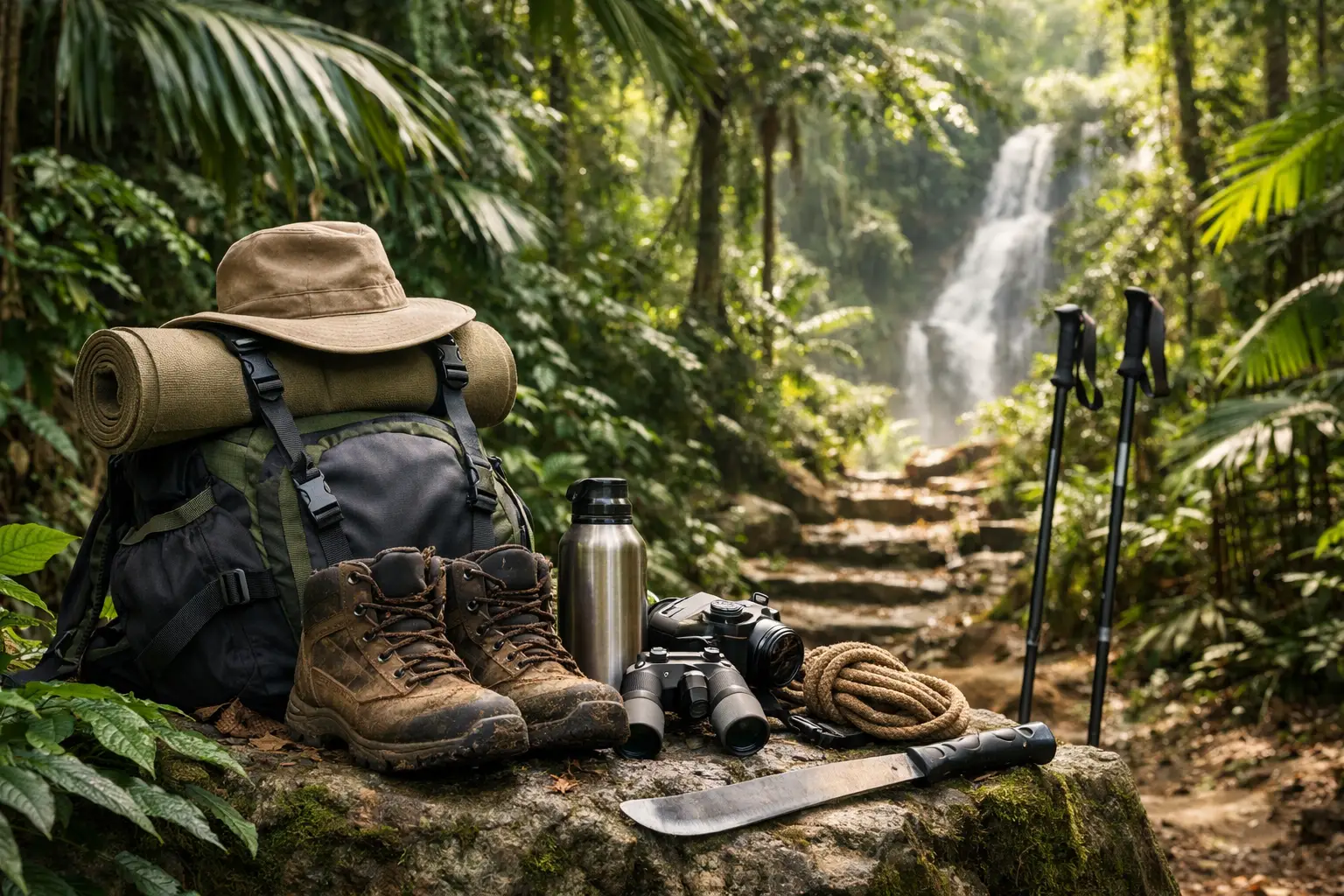
Footwear matters even more. Many first-time travelers assume any sneaker will do. Sometimes that works on short, dry, easy paths. But jungle terrain can shift quickly from packed earth to slick roots, mud, rock, or shallow stream crossings. Closed-toe hiking shoes or trail shoes with solid grip are usually the safest option. If your route includes water and mud, quick-drying footwear with traction may be better than heavy boots that stay soaked.
The trade-off is simple. Boots offer ankle support and protection, but they can feel hotter and heavier. Trail shoes are lighter and often more comfortable, but they may give less support on rough ground. It depends on the trail, your balance, and how used you are to hiking. What does not help is brand-new footwear. Break in your shoes before the trip so the jungle is not where you discover a blister problem.
Pack light, but pack for the conditions
A jungle daypack should feel practical, not overloaded. You do not need to prepare for every possible scenario, but you do need the basics that actually affect comfort and safety.
Water comes first. In humid tropical conditions, you can lose more fluid than you expect, even on a moderate hike. Bring more water than you think you will need, especially if you are not used to the heat. A reusable bottle or hydration pack both work well. If your tour is guided, ask ahead how long the hike is and whether there will be chances to refill.
Bug repellent is another must. In the jungle, insects are part of the environment, not a surprise. Apply repellent before the hike and bring a small amount for reapplication if needed. Sunscreen matters too, even when much of the trail is shaded. Open riverbanks, trail clearings, and midday conditions can still leave you burned.
A small dry bag or zip pouch is worth bringing for your phone, wallet, and other valuables. Tropical weather can change quickly, and water crossings or sudden rain are always possible. Add a hat if you like extra sun protection, and pack a light rain jacket if the forecast looks uncertain. Keep it simple. Extra weight feels heavier in the heat than it does at home.
Prepare your body for heat, humidity, and pace
One of the biggest mistakes travelers make is treating a jungle hike like a city walk. Distance alone does not tell you how demanding the experience will feel. Heat, humidity, elevation changes, slippery terrain, and frequent stops to look at wildlife or natural features all shape the pace.
If you are traveling to Belize from a cooler climate, give yourself some grace. The air can feel heavier, and that affects energy levels. Hydrate well the day before, eat a decent breakfast, and avoid starting your hike already depleted from too little sleep or too many drinks the night before.
You do not need to be an athlete to enjoy a jungle trail. Many hikes are suitable for travelers with moderate fitness, especially with a knowledgeable guide setting the pace. But it helps to be honest about your comfort level. If you have knee issues, balance concerns, or low heat tolerance, share that before the tour starts. A good local guide would rather adjust the experience early than have you push too hard and struggle later.
How to prepare jungle hike expectations
Preparation is not only physical. It is also about understanding what the jungle is and what it is not. The jungle is beautiful, but it is not polished. Trails may be muddy. You may sweat more than expected. You may hear plenty of wildlife and only catch quick glimpses. That is normal.
At the same time, this is part of what makes the experience memorable. In Belize, a guided jungle hike can reveal details most visitors would miss on their own – animal tracks in soft ground, the call of a specific bird, the use of a plant in traditional life, or the way a cave system shapes the landscape around it. If you arrive expecting a paved attraction, you may feel underprepared. If you arrive ready for an active, sensory, living environment, you will enjoy much more of what makes the inland experience special.
It also helps to expect a slower rhythm than resort travel. Private and small-group inland adventures often feel richer because they leave room for questions, wildlife stops, and real conversation. That pace is not a delay. It is part of the value.
A guided hike changes the experience
You can prepare well on your own, but local guidance still makes a major difference in the jungle. Trails can look straightforward until they branch, flood, or change under seasonal conditions. Wildlife is easier to hear than to see if you do not know what to look for. And in places with cultural and natural history layered together, context turns a walk into an experience.
This is especially true in Belize, where inland trails can connect forests, caves, rivers, and Maya heritage in one outing. A licensed local operator such as Belize Inland Tours brings more than route knowledge. You get pacing, safety awareness, interpretation, and the kind of practical judgment that helps the day stay enjoyable when conditions shift.
For many travelers, that guidance also removes a lot of uncertainty. You are not guessing what shoes make sense, whether the trail is suitable for your group, or how to move through the environment respectfully. You can focus on the hike itself.
Small details that make a big difference
A few simple choices often separate a smooth day from an uncomfortable one. Start early when possible, since morning conditions are usually cooler and wildlife activity can be better. Keep your hands as free as you can, which is another reason a small backpack works better than carrying loose items.
Skip anything that makes movement harder. Heavy jewelry, oversized bags, and bulky layers are more trouble than they are worth. If you bring a camera, protect it from moisture and keep expectations realistic. Sometimes the best moments happen too fast for a perfect photo.
Most of all, listen to your guide and to your own body. If you need a quick water break, say so. If a section feels slippery, take your time. There is no prize for pretending jungle conditions are easier than they are.
The best jungle hikes are not the ones where you packed the most gear or tried to look like an expert. They are the ones where you came prepared enough to relax into the experience – to hear the forest, watch the trail carefully, and let Belize show itself at its own pace.

