
 Uncategorized
A Maya city can look quiet from a distance: stone temples rising above the trees, a plaza open to the sun, the calls of birds carrying through the bush. But Belize archaeology excursions become far more meaningful when you understand what happened in those spaces – where rulers performed ceremonies, where families lived, how trade moved through the region, and why a jungle-covered mound may be as important as the tallest pyramid.
Belize is not a place where ancient history sits behind glass. Maya heritage is woven into the landscape, from major ceremonial centers to cave systems once used for ritual offerings. The best way to experience it is with enough time to slow down, ask questions, and let a knowledgeable local guide connect the stones, forest, and living culture around you.
What Makes Belize Archaeology Excursions Different
The ancient Maya world was not one single city or kingdom. It was a network of powerful centers, farming communities, trade routes, and sacred landscapes that changed over centuries. Belize was a vital part of that world, and its archaeological sites show a remarkable range of Maya life.
At some sites, visitors climb elevated plazas and look across the canopy from temples built by competing dynasties. At others, the story is closer to daily life: residential courtyards, water reservoirs, carved stelae, ball courts, and the remains of markets. The setting matters, too. A ruin in open countryside feels different from one reached by a jungle trail or approached along a river.
That variety is why choosing an excursion by name alone can be limiting. A large site may be right for travelers who want scale and dramatic architecture. A smaller site can be better for families, history-minded couples, or private groups who prefer a quieter walk and more time for interpretation. There is no single “best” ruin for every traveler. The right one depends on your interests, available time, fitness level, and where you are staying in Belize.
Choose the Right Maya Site for Your Day
Xunantunich for views and royal history
Xunantunich is one of Belize’s best-known Maya sites, set near the Mopan River in western Belize. Its main temple, El Castillo, rises above the surrounding landscape and offers sweeping views on a clear day. The site is a strong choice for travelers who want an impressive first encounter with Maya architecture without committing to the longest possible day on the road.
Its carved friezes and elevated ceremonial spaces give guides plenty to interpret. The experience is not simply about reaching the top. A good guide can explain how the site’s layout reinforced status, ceremony, and political power, then point out details visitors might otherwise pass without seeing.
Cahal Pech for a closer look at everyday Maya life
Near San Ignacio, Cahal Pech is compact but richly layered. It is especially rewarding for travelers who enjoy moving through courtyards, rooms, and smaller structures rather than standing only at the base of monumental temples. The site was once an elite residence and ceremonial center, and its maze-like layout helps bring the human scale of an ancient community into view.
Because it is generally easier to combine with other inland experiences, Cahal Pech can work well for travelers who want archaeology without making the entire day about a single ruin. It is also a practical option for those based in the Cayo District.
Caracol for scale, distance, and commitment
Caracol is Belize’s largest known Maya site and one of the most powerful reminders that the forest once held dense, organized urban centers. Its scale is extraordinary, with extensive causeways, reservoirs, plazas, and temples spread across a vast area.
A visit to Caracol is a full-day commitment due to its remote location. That travel time is worthwhile for visitors who want to spend a day immersed in a major archaeological landscape, but it may not suit every itinerary. Families with very young children, travelers with limited time, or anyone hoping for a relaxed half-day may prefer a closer site. The reward for making the journey is a sense of just how extensive and sophisticated this Maya center was.
Lamanai for archaeology by water
Lamanai offers a different rhythm. Reached by river in northern Belize, it combines Maya ruins, forest, wildlife, and the feeling of arriving somewhere set apart from modern roads. The boat journey is part of the experience, often bringing sightings of birds, iguanas, and other wildlife before the first temple appears.
This is a particularly appealing choice for travelers who want culture and nature in the same day. It is less about checking off a famous landmark and more about experiencing how waterways supported movement, trade, food, and settlement across the ancient landscape.
Caves Are Part of Belize’s Archaeological Story
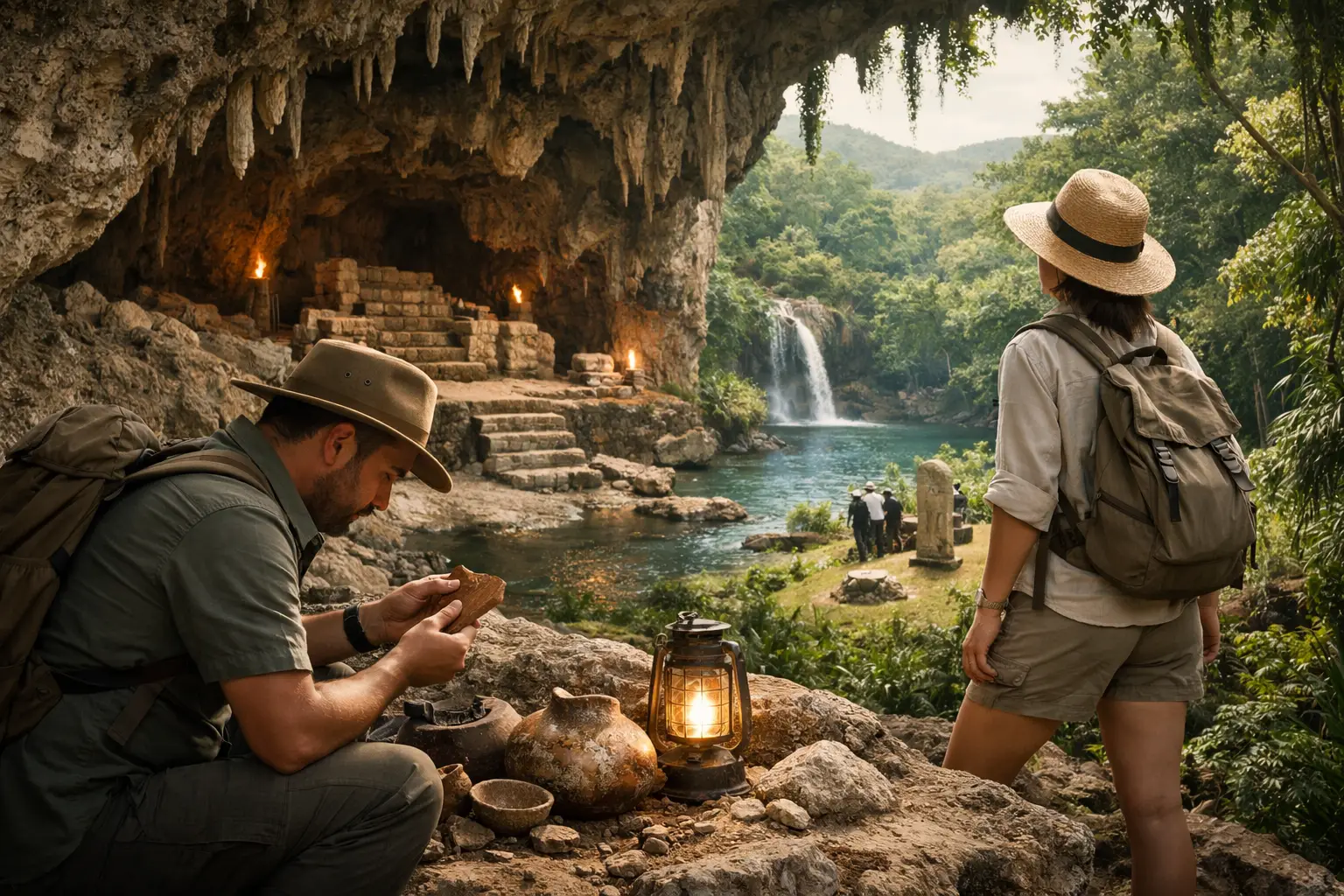
For the ancient Maya, caves were not empty holes in the ground. Many were understood as sacred places connected to water, fertility, ancestors, and the underworld. Ceramics, offerings, and other archaeological evidence show that certain caves were used for ceremony over long periods.
This makes cave exploration in Belize more than an adventure activity. In the right setting, a guide can help visitors understand why water dripping from limestone, narrow passages, darkness, and underground chambers carried spiritual meaning. The experience changes when you recognize that a cave was not merely a shelter or a geological formation, but part of a sacred map.
Cave-based archaeology excursions require sound judgment. Conditions can vary with weather, water levels, footing, and the physical demands of the route. Some visitors will be comfortable with moderate hiking or wading; others may prefer a gentler cave tubing or cave kayaking experience. A licensed local operator should be clear about what the day involves, provide appropriate safety direction, and never rush a group through a sensitive environment.
Why a Private Guide Changes the Experience
At a busy archaeological site, it is easy to follow the crowd, take a few photographs, and leave with only a general impression. Private guiding creates room for a more personal day. You can move at your group’s pace, spend longer at the structures that interest you, take breaks when needed, and ask the questions that turn a ruin into a story.
Local interpretation also adds context that a signboard cannot provide. Belize’s archaeological heritage exists alongside modern communities, languages, food traditions, forests, and farming landscapes. An experienced guide can explain how ancient Maya knowledge of land, water, and seasonal cycles still helps shape the region today, while treating the past with respect rather than turning it into a spectacle.
For travelers seeking quieter inland experiences, private tours also make it easier to plan around timing. An earlier start, a route chosen for your group’s interests, or a less hurried pace can make a familiar site feel more personal. Belize Inland Tours builds this kind of flexibility into private inland outings, pairing cultural interpretation with the practical attention that helps guests feel comfortable in the jungle.
Prepare Well and Travel Respectfully
Archaeological sites in Belize are outdoor places, often hot and humid, with uneven paths, steps, and limited shade. Lightweight clothing, closed-toe walking shoes, sun protection, insect repellent, and a refillable water bottle are sensible basics. A light rain layer is useful in the wet season, even when the morning begins bright and clear.
Bring curiosity, but leave artifacts, plants, and stones exactly where they are. Do not climb areas that are closed, step beyond designated paths, or touch carvings and fragile surfaces. Small actions matter at sites that have endured for centuries. Respectful travel protects the experience for future visitors and supports the ongoing work of Belizean archaeologists, rangers, and local communities.
Photography is usually part of the day, but the strongest memories are often less photogenic: the cool air at the entrance to a cave, the sound of rain on broad leaves, the moment a guide points out an ancient water system hidden in plain sight. Give yourself time for those moments. A well-paced day in Belize’s inland country can leave you with more than photographs of ruins – it can leave you with a clearer sense of the people, beliefs, and landscapes behind them.

